

The Federal Bureau of Revenue (FBR) is set to launch simplified digital tax returns for salaried individuals starting July 15, as part of its broader tax reforms aimed at easing compliance and expanding the tax base.
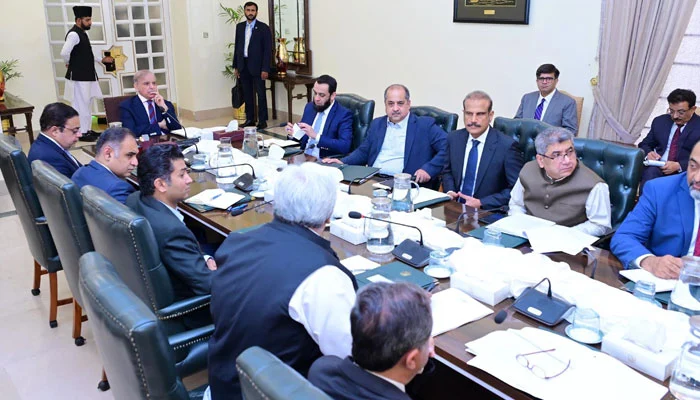
This development was announced during a high-level meeting chaired by Prime Minister Shehbaz Sharif on Monday, which reviewed progress on the FBR’s digitization efforts, including the implementation of an Artificial Intelligence (AI)-based assessment system and other structural reforms.
According to the official briefing, salaried taxpayers will significantly benefit from the new digital forms, which have been designed to be concise, user-friendly, and available in Urdu. The Urdu-language returns for salaried individuals will also be formally accessible by July 30.
During the meeting, the Prime Minister emphasized that expanding the tax base and alleviating the tax burden on the poor are among the government’s top priorities. Hailing the availability of simple tax returns in Urdu, he directed the establishment of a helpline to assist with tax filing and the launch of digital invoicing in Urdu. He stressed, “In tax reforms, the focus should remain on the convenience of the common man.”
The Premier instructed that third-party validation be ensured for all FBR reforms to maintain transparency. He highlighted that tax returns have been made extremely user-friendly by making them digital, concise, and linked to a centralized database for public convenience. PM Shehbaz directed the launch of a public awareness campaign about the simplified tax returns to encourage more people to file under the new system.
He commended Finance Minister Muhammad Aurangzeb, the economic team, the FBR chairman, and their teams, attributing the positive results of the tax reforms to their tireless efforts. “For the first time in the country’s history, the implementation of an AI-based tax assessment system is a big success, and the FBR’s initiatives are commendable,” he stated. He also instructed that small and medium-sized businesses should receive special support in joining the digital invoicing system.
Meanwhile, participants were briefed on progress related to digital invoicing, e-bilty, simplified tax returns, the AI-based assessment system, the establishment of a central command and control center, and the cargo tracking system. It was informed that bidding for the FBR command and control unit would be completed soon, and the system will be fully functional by September. This will not only provide centralized data but also aid in decision-making.
The meeting was also updated on the AI-based assessment system. Traders are now permitted to submit advance goods declarations before the arrival of ships, granting them full exemption on upfront duties and taxes. This system is expected to boost the percentage of advance goods declarations from 3% to over 95%, allowing containers with advance declarations to be delivered directly from the port to factories.
Regarding digital invoicing, the meeting was informed that all businesses, both large and small, will now be required to issue receipts at the point of sale through the FBR’s online system. Around 20,000 businesses are anticipated to join this system in the coming months. In just one month, 8,000 invoices totaling 11.6 billion rupees were issued through this system.
This system includes a taxpayer portal and a monitoring dashboard. It was shared that businesses can join the system free of cost through PRAL (Pakistan Revenue Automation Ltd), and training is being provided to traders. Once fully implemented, separate sales tax returns will no longer be necessary, as all transactions will be automatically recorded in the system. Additionally, the internationally recognized 8-digit HS Code will help eliminate fake and flying invoices, and digital invoicing will facilitate the assessment of the sales tax system’s performance. Business training sessions are ongoing to enhance the system’s effectiveness.
Finally, the meeting also received a briefing on the progress of the cargo tracking system and e-bilty system. It was explained that this system will enable real-time monitoring of goods movement and tax payment tracking. AI-based assessment will also be possible through this, significantly enhancing the effectiveness and efficiency of tax enforcement.
