

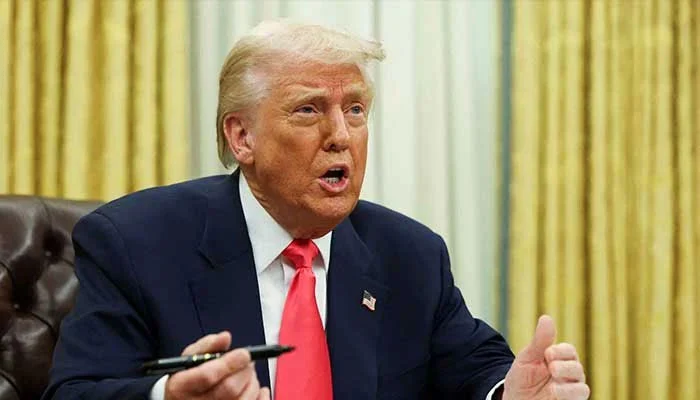
US President Donald Trump has declared a dramatic 50% tariff on all goods originating from Brazil, a decision made just days after a heated verbal exchange with Brazilian President Luiz Inacio Lula da Silva.
This sudden measure arises from escalating tensions between the two leaders. Trump has openly criticized Brazil’s approach to free speech and has come to the defense of former President Jair Bolsonaro, who is currently facing trial on charges of plotting a coup to prevent President Luiz Inacio Lula da Silva from taking office in 2023. Lula, for his part, had previously referred to Trump as an unwanted “emperor,” further inflaming the situation.
In his letter announcing the tariffs, Trump explicitly linked the new levies to Brazil’s handling of former President Jair Bolsonaro, stating the imposition was due “in part to Brazil’s insidious attacks on Free Elections, and the fundamental Free Speech Rights of Americans.” This letter was issued on Trump’s Social Truth platform.
Responding to Trump’s declaration, Brazil swiftly threatened retaliation. “Any unilateral tariff increases will be addressed in light of the Brazilian Law of Economic Reciprocity,” Lula posted on X, signaling Brazil’s intent to respond in kind.
Following the announcement, Brazil’s real currency extended its earlier losses, dropping over 2% against the dollar. Companies such as planemaker Embraer and oil major Petrobras also experienced setbacks on the US stock market, as financial markets reacted to tariffs widely expected to inflict significant economic hardship on Brazil.
The Brazilian government did not immediately issue an official comment on Trump’s tariffs. However, Lula, his vice-president, his finance minister, and other key officials were summoned to an emergency meeting in Brasília on Wednesday night to discuss the new levies and formulate a response.
The US stands as Brazil’s second-largest trading partner, trailing only China. The newly announced 50% tariffs represent a substantial increase from the 10% tariffs that were initially declared in April. Trump’s letter specified that the 50% tariff will commence on August 1 and will apply separately from all existing sectoral tariffs.
On Monday, Lula had directly challenged Trump after the US leader threatened to impose an additional 10% tariff on the BRICS group of developing nations, which Trump had labeled “anti-American,” during their summit in Rio de Janeiro.
“The world has changed. We don’t want an emperor,” Lula told reporters when questioned about the potential BRICS tariff. “We are sovereign nations,” Lula affirmed. “If he thinks he can impose tariffs, other countries have the right to impose tariffs too.”
Bolsonaro ‘Witch Hunt’ Claims Fuel Diplomatic Fire
Tensions between the United States and Brazil had already been escalating on Wednesday after Brazil’s foreign ministry summoned the US Embassy’s chargé d’affaires to address a statement defending Bolsonaro.
Around the same time, Trump, speaking to reporters at an event with West African leaders at the White House, asserted that Brazil “has not been good to us, not good at all,” adding that the tariff rates would be based on “very, very substantial facts” and past history. The US Embassy in Brasília confirmed the meeting between its chargé d’affaires and Brazilian foreign ministry officials but declined to disclose details of the conversation.
Trump’s strong support for Bolsonaro mirrors his backing for other global right-wing leaders who have faced domestic legal cases, including French far-right leader Marine Le Pen and Israeli Prime Minister Benjamin Netanyahu. Trump has consistently characterized the cases against these leaders as a “witch hunt,” a term he frequently employed for the legal challenges he himself faced in the US after the conclusion of his first term in office.
On Monday, Trump explicitly stated in a social media post that Bolsonaro was the victim of such a “witch hunt.” The American Embassy in Brasília issued a statement to the local press on Wednesday echoing Trump’s remarks, asserting: “The political persecution of Jair Bolsonaro, his family and his supporters is shameful and disrespectful of Brazil’s democratic traditions.”
In his letter, Trump also instructed US Trade Representative James Greer to initiate an investigation into what he described as unfair trade practices by Brazil, particularly concerning US companies’ digital trade. Trump further criticized decisions by Brazil’s Supreme Court, which he claimed led to the censorship of social media firms.
Brazil’s Supreme Court has faced long-standing criticism from Bolsonaro’s allies for ordering social media platforms to remove content from leaders associated with their far-right movement. Last month, the court also imposed increased responsibilities on these companies.
Significant Impact on Food Exports Anticipated
The imposition of tariffs on Brazil could have a considerable impact on food prices within the United States. Approximately one-third of the coffee consumed in the US, the world’s largest consumer of the beverage, is sourced from Brazil, which holds the title of the world’s largest coffee grower. According to industry groups, annual Brazilian coffee exports to the US are close to 8 million bags.
Moreover, over half of the orange juice sold in the US originates from Brazil, which accounts for an overwhelming 80% share of the juice’s global trade. This South American agricultural powerhouse also exports substantial quantities of sugar, beef, and ethanol to the US, among other products.
“This measure impacts not only Brazil, but the whole US juice industry that employs thousands of people and has had Brazil as its main supplier for decades,” remarked Ibiapaba Netto, the executive director of the Brazilian orange juice industry group CitrusBR, underscoring the potential widespread economic ramifications.
