

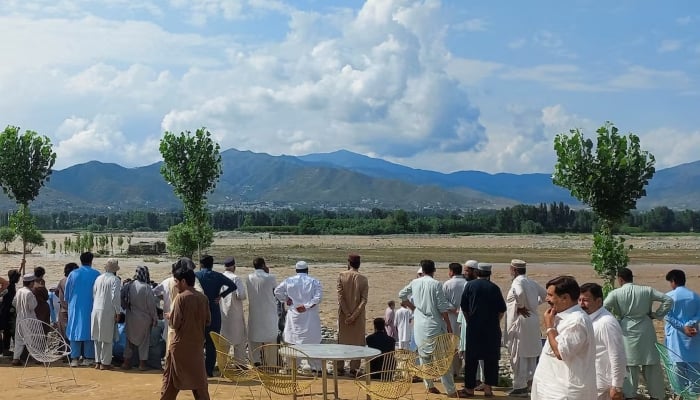
As the death toll from the Swat River incident tragically reached 12, critical questions have emerged regarding administrative lapses, rampant illegal riverbed mining, and delayed rescue operations, all of which may have exacerbated the catastrophe. The event unfolded on Friday when 17 members of a family from Sialkot were swept away by a sudden surge in the Swat River while enjoying a picnic near its bank. Harrowing videos circulated online, depicting the family trapped on a rapidly diminishing island of land, desperately calling for help for nearly an hour with no immediate rescue in sight.
To date, 12 bodies have been recovered, including that of a child found in Charsadda on Sunday. The search efforts continue as one individual remains missing. Although this year’s flooding has not reached the devastating scale witnessed in 2010 or 2022, the damage has been considerable. The floodwaters reportedly surged from areas such as Khwazakhela, Manglor, and Malam Jabba—regions not typically associated with the river’s initial rise—creating unexpected and perilous conditions downstream.
Observers point to the authorities’ failure to issue timely alerts as a crucial contributing factor. It is widely believed that had early warnings been communicated and residents directed to safer locations, several lives could have been saved.
Unchecked Illegal Riverbed Mining
Illegal mining along the Swat River is also under intense scrutiny. The unregulated excavation of gravel and sand from the riverbed has significantly altered its natural course. The use of heavy machinery has led to the formation of deep pits and mounds within the river, obstructing water flow and potentially contributing to dangerous surges during periods of high water. These activities have reportedly continued in plain sight, raising serious concerns about the effectiveness of regulatory enforcement.
Lapses in Rescue and Equipment Shortages
The rescue operation itself has faced considerable criticism. Despite being stationed merely 3 to 4 kilometers from the incident site, Rescue 1122 teams reportedly took a critical 19 minutes to arrive and were found to be ill-equipped, lacking essential tools such as boats, ropes, and trained divers. Necessary equipment had to be ordered during the operation, arriving too late to make a meaningful difference.
Furthermore, attention has turned to encroachments along the riverbank. Critics have questioned how structures were allowed to be built within 200 feet of the river, in blatant violation of safety regulations. While the government has since initiated a crackdown on such illegal constructions, there are growing calls for accountability against the officials who issued no-objection certificates (NOCs) and building permits that facilitated these violations.
Scrutiny Over Encroachment Enforcement
Concerns have also been raised regarding the fairness of the anti-encroachment drive, with accusations that enforcement may be selective. Observers emphasize that for the operation to be truly effective and gain public acceptance, it must be carried out without bias, regardless of the socioeconomic or political status of those affected.
In response to the tragic incident, the Khyber Pakhtunkhwa government has imposed a complete ban on mining along riverbeds and launched a province-wide operation to remove illegal structures. KP Chief Secretary Shahab Ali Shah announced that the crackdown would extend to all unauthorized constructions, including hotels built too close to rivers, as part of a broader effort to prevent future tragedies.
Authorities are now under increased pressure to address the systemic issues that contributed to this deadly incident and to implement comprehensive reforms that prioritize public safety and accountability.
