

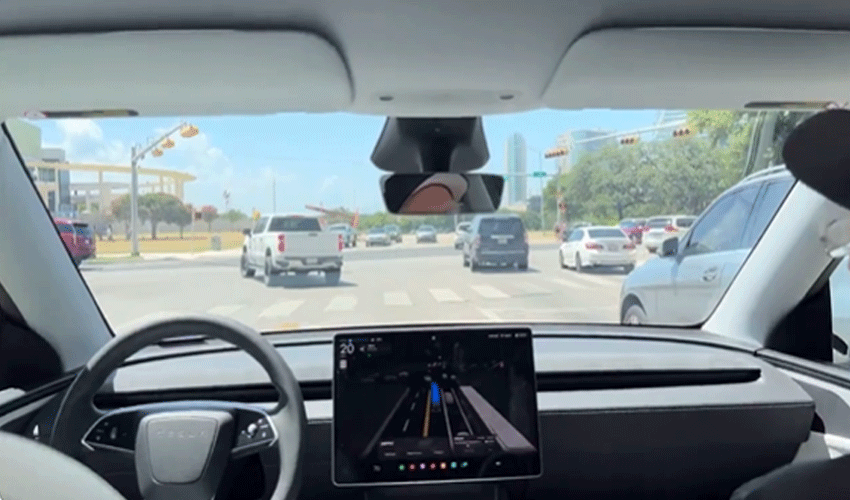
Tesla has discreetly launched its highly anticipated robotaxi service, utilizing driverless Model Y SUVs. This marks a significant stride in the electric carmaker’s ambition to deploy autonomous vehicles powered solely by cameras and artificial intelligence.
The launch follows years of ambitious projections from CEO Elon Musk, who has consistently promised the imminent arrival of fully autonomous Tesla vehicles. The company is now offering early access to a select group of vetted users through a new app-based hailing service, operational daily from 6:00 a.m. to midnight. However, rides may still be subject to weather-related interruptions.
A flat fare of $4.20 per ride has been set for the pilot service, a price point some see as a nod to Musk’s past online behavior. Initial reports indicate that approximately ten 2025 Model Y vehicles are operating within a predefined geographical area, each with a Tesla employee, referred to as a “safety monitor,” seated in the front passenger seat. The exact responsibilities and intervention levels of these monitors remain unclear.
Videos circulating on social media have showcased the vehicles in operation, while on-ground observers confirmed sightings of the branded robotaxis departing from what appears to be a company depot. Notably, auto industry author Ed Niedermeyer documented one Tesla robotaxi abruptly braking near police vehicles, raising questions about the vehicle’s responsiveness and real-world driving judgment.
Despite the public rollout, Tesla has shared limited official information. A dedicated page on Tesla’s website provides basic guidance on using the app, recovering lost items, and rider rules, but it notably omits crucial details regarding the technology’s safety protocols, system limitations, or the performance metrics typically disclosed by competitors like Waymo.
Adding to the opacity, Tesla has attempted to block public access to records related to the robotaxi program. In separate legal cases involving TechCrunch and Reuters, the automaker sought to prevent the release of relevant documents by Texas transportation authorities, citing the need to protect trade secrets and business-sensitive information.
Tesla’s robotaxi launch strategy significantly deviates from that of other autonomous vehicle developers. These typically commence with extensive human-supervised testing phases before introducing limited public services. Tesla, however, has transitioned directly to commercial operations, albeit with human monitors still present in every vehicle.
While previous demonstrations featured Tesla’s signature Cybercab vehicle, unveiled last October, the current fleet comprises retrofitted Model Ys equipped with a new version of Tesla’s Full Self-Driving (FSD) software, which Musk describes as “unsupervised AI.” The company states that the in-cabin camera will remain off during rides unless support is needed or in emergencies. Following each ride, the system will use the camera to assess the vehicle’s readiness for its next trip.
Riders are permitted to record their experiences, but Tesla warns that those who violate its usage rules, including sharing content showing misuse, risk suspension from the service. Prohibited behaviors include smoking, vaping, consuming alcohol, using illicit substances, or committing any criminal act while on board.
Musk and top executives celebrated the launch over the weekend, with the company’s self-driving lead, Ashok Elluswamy, posting images from a private event. Musk hailed the launch as the “culmination of a decade of hard work” by Tesla’s AI and hardware teams.
Nevertheless, the debut has sparked questions regarding transparency and public safety. One early user reported that remote Tesla staff had to intervene during a ride, although the overall experience was later described as smooth.
