

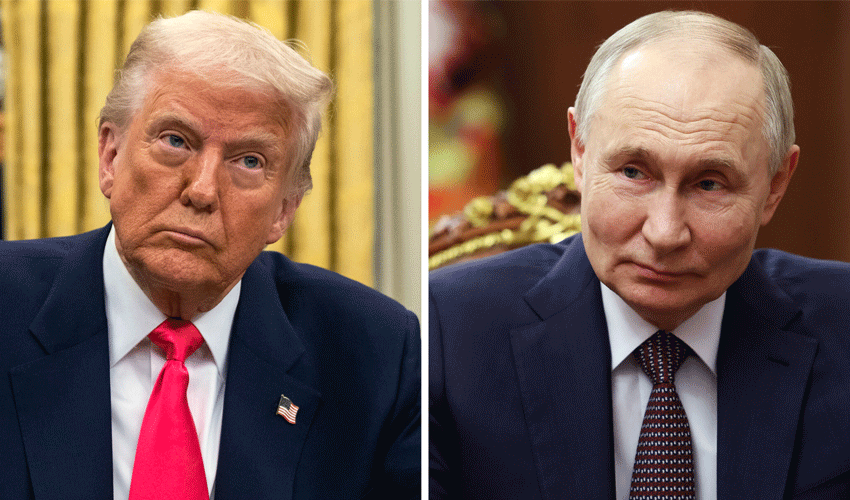
Russian President Vladimir Putin has strongly condemned the recent Israeli and U.S. hostilities against Iran, labeling them “groundless, unjustifiable, and illegitimate” during discussions with Iranian Foreign Minister Abbas Araghchi in Moscow.
Russia’s Stance and Call for Diplomatic Engagement
Putin described the attacks on Iran as “an unprovoked aggression” that violates international norms, stating, “There can be no justification for such actions.” He emphasized Russia’s readiness to support the Iranian people and stressed the crucial importance of diplomatic engagement in resolving the escalating crisis. Welcoming Araghchi to the Kremlin, Putin noted, “Your visit allows us to discuss these pressing issues and jointly think about a way out of the current situation.”
Araghchi, who arrived in Moscow on Monday, explained that his visit was necessary for “closer, more precise, and more serious consultations” with Russia following the U.S. strikes on Iran’s nuclear facilities over the weekend. Araghchi thanked Putin for condemning the U.S. attacks and lauded Russia for standing on “the right side of history.” He also conveyed best wishes from Iran’s Supreme Leader Ayatollah Ali Khamenei and President Masoud Pezeshkian to the Russian president.
China Expresses Concern Over Regional Instability and Global Economy
Meanwhile, China has voiced serious concerns about the conflict’s potential to destabilize the region and harm the global economy. Chinese Foreign Ministry spokesman Guo Jiakun called on the international community to intensify efforts to de-escalate the situation, warning of the “spillover of war.”
“The Gulf and surrounding waters are important international trade routes,” Guo stated, urging all parties to prevent further escalation and to return to political dialogue. “China calls on the international community to make greater efforts to prevent regional instability from having a wider impact on global economic development.”
As regional tensions mount following the U.S. and Israeli strikes on Iran, Russia and China are emerging as key diplomatic voices urging restraint and promoting peaceful resolutions.
