

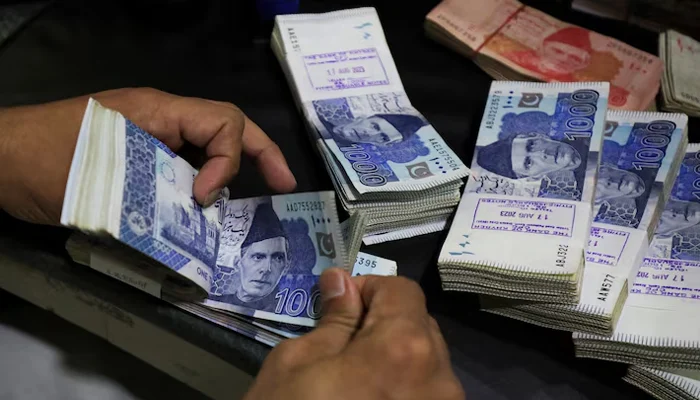
According to The News, Pakistan’s debt servicing is projected to consume a significant 46.7% of the federal budget in the upcoming fiscal year 2025-26, amounting to an astonishing Rs8.2066 trillion out of a total budget of Rs17.573 trillion. This allocation represents the largest proportion of the government’s current expenditures dedicated to interest and loan repayments.
While this allocation marks an 8.26% decrease – Rs739 billion less – from the revised spending of Rs8.945 trillion in the current fiscal year, the sheer scale of the debt servicing further tightens the fiscal noose, significantly squeezing funds available for essential services such as healthcare, education, and development.
Domestic debt servicing alone is anticipated to cost Rs7.197 trillion, with an additional Rs1.009 trillion earmarked for foreign loan repayments. By the end of March 2024, Pakistan’s public debt had reached a staggering Rs76.01 trillion (US$269 billion) — an increase of more than quadruple over the past decade — comprising Rs51.52 trillion in domestic and Rs24.49 trillion in external liabilities.
Public debt has now climbed to 66.27% of GDP, thereby breaching the legal limits established under the Fiscal Responsibility and Debt Limitation Act (FRDLA).
This heavy debt burden has already significantly strained the national exchequer. In the first nine months of FY25, a substantial Rs6.44 trillion was paid in interest – representing 66% of the full-year debt servicing target. Of this amount, Rs5.78 trillion was allocated to domestic lenders and Rs656 billion to foreign creditors.
Despite the Ministry of Finance’s assurances regarding improved cash-flow planning and the utilization of longer-term borrowing instruments, the debt spiral persists. Mounting repayment obligations have not only crowded out private investment but also weakened the rupee, fueled inflation, and deepened the nation’s reliance on further borrowing, thereby exacerbating a vicious fiscal cycle.
Gross external inflows stood at $5.07 billion during July-March FY25, primarily sourced from multilaterals ($2.8 billion), commercial channels ($2.01 billion), and bilateral partners ($258 million). However, the country was unable to access capital markets during this period, issuing no global bonds.
Concurrently, external outflows surpassed inflows at $5.636 billion, largely driven by repayments to multilateral creditors ($2.828 billion), bilateral partners ($1.565 billion), and commercial lenders ($1.243 billion), which placed additional strain on the nation’s foreign exchange reserves.
