

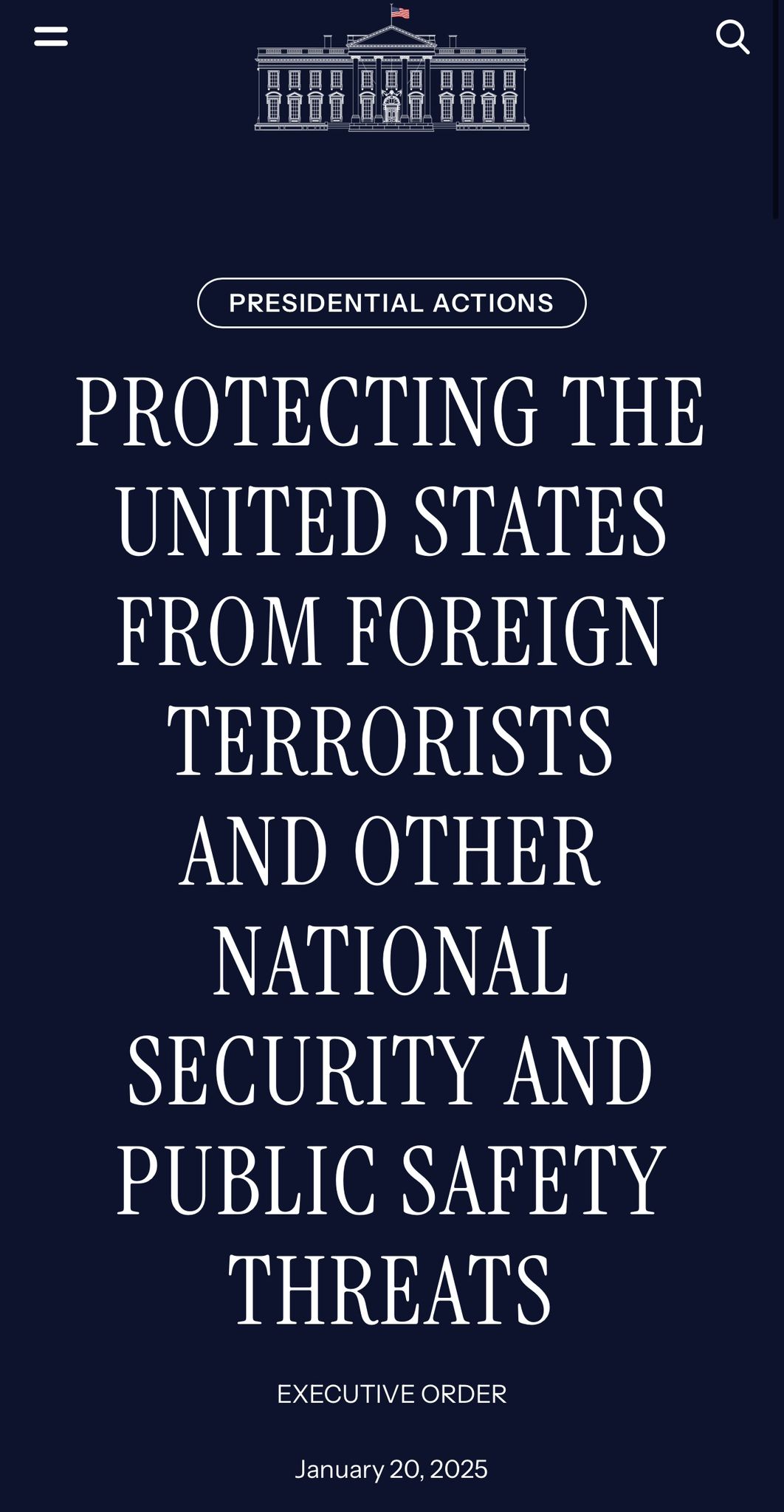
President Trump Issues executive Order Against Foreign Nationals Supporting Terrorism, Concerns Raised Over Ambiguous Language Potentially Targeting Religious and Political Beliefs with Deportation and US Entry Ban
By: Raja Zahid Akhtar Khanzada
Washington DC: President Trump Issues executive order titled “Protecting the United States from Foreign Terrorists and Other National Security and Public Safety Threats.” This order aims to identify, scrutinize, and potentially deport foreign nationals deemed a threat to the nation’s security. It specifically targets individuals supporting organizations such as Hamas and Hezbollah, raising concerns among international students, employees, and visitors about the implications for those participating in political or cultural activities linked to these groups. The directive empowers federal agencies, including the Department of Homeland Security, the State Department, and intelligence agencies, to conduct strict surveillance and assessment of individuals to mitigate potential risks.
The order expands the scope of scrutiny to foreign nationals already residing in the United States who hold anti-American views or engage in activities promoting hate or violence. Visa holders, particularly those from regions such as the Middle East, South Asia, and North Africa, will face enhanced background checks. Non-citizen residents, including green card holders, may also be subject to deportation if they fail to align with American values or are found involved in actions deemed hostile. International students enrolled in U.S. universities are expected to face increased monitoring of their political and social activities, while refugees and asylum seekers will undergo intensified vetting to ensure their intentions comply with national security objectives.
The order also includes measures affecting international relations, with stricter visa issuance protocols for citizens of countries that fail to provide adequate intelligence-sharing cooperation. Countries linked to terrorism may face additional sanctions or diplomatic pressure to enhance collaboration in addressing security concerns. Organizations advocating for human rights and religious freedoms have raised alarms, comparing this directive to Trump’s earlier “Muslim ban,” arguing that it disproportionately affects Muslim-majority countries without directly naming them. Critics warn of potential racial and religious discrimination, as well as restrictions on freedom of expression. Supporters of the order, however, view it as a necessary step to prevent foreign nationals from exploiting American liberties to foster division or incite violence.
Legal experts have voiced concerns about the ambiguous language in the order, particularly terms such as “anti-American ideologies” and “assimilation,” which could result in individuals being targeted based on their political beliefs or cultural practices. These concerns are compounded by fears that the order may undermine the constitutional rights of non-citizens residing in the United States. To implement the directive, federal agencies have been instructed to submit a detailed report within 60 days, identifying high-risk countries and individuals while reviewing visa policies to enforce stricter restrictions on travelers from these regions. Social media activities and political engagements of international students, employees, and visitors will also be closely monitored.
This presidential order represents one of the most stringent measures taken by the Trump administration to address terrorism and national security threats, reflecting its broader stance on immigration and foreign policy. As federal agencies begin to implement the directives outlined in the order, additional updates and clarifications are expected. The complete text of the presidential order is available on the official White House website:
https://www.whitehouse.gov/presidential-actions/2025/01/protecting-the-united-states-from-foreign-terrorists-and-othernational-security-and-public-safety-threats/
