

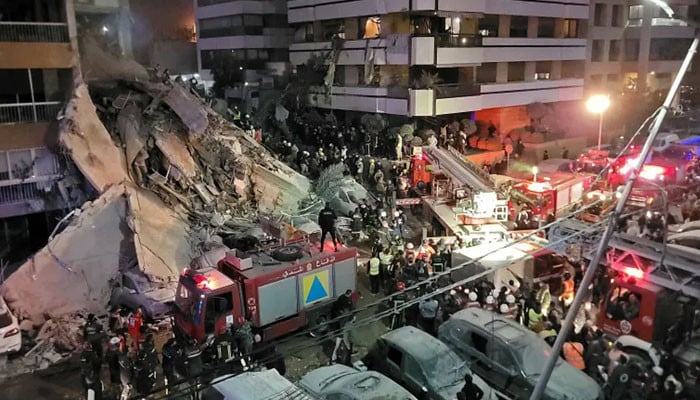
Lebanon-Israel tensions have reached a boiling point after a series of Israeli airstrikes left hundreds dead and thousands injured. According to Lebanon’s Civil Defense, the attacks resulted in the deaths of at least 254 people, with 1,165 injured. The strikes targeted various regions in Lebanon, including Beirut, Bekaa Valley, Mount Lebanon, Sidon, and Southern Lebanon.
The Israeli military claims that the operation was part of a broader military campaign aimed at Hezbollah’s military infrastructure, with over 100 command centers and military sites targeted. Israeli Defense Minister Benny Gantz stated that Israel will continue to target Hezbollah’s strongholds in Lebanon without any ceasefire agreements. Israeli Prime Minister Benjamin Netanyahu emphasized that Lebanon, the US, and Iran are not part of the ceasefire agreement, and Israel will continue to conduct military operations in Lebanon.
US President Donald Trump has described the situation in Lebanon as a “separate issue” from the US-Iran ceasefire agreement, stating that the US will decide whether to pursue a ceasefire or continue the war with Israel. Pakistani officials have maintained that Lebanon is part of the ceasefire agreement. Amidst the escalating tensions, Lebanon’s Medical Organization has appealed to doctors to report to hospitals immediately, while Beirut’s major hospitals have issued an urgent appeal for blood donations.
In response to the airstrikes, Lebanon’s Parliament Speaker Nabih Berri has described the attacks as a “complete war crime.” Hezbollah has stated that the attacks will only strengthen the resistance movement and threaten the ceasefire agreement if military operations continue.
Iran’s Revolutionary Guard has warned that if Israel continues to attack Lebanon, it will respond accordingly. Iranian Foreign Minister Abbas Araghchi has stated that the US must decide whether to pursue a ceasefire or continue the war with Israel. US Vice President Mike Pence has claimed that there is a “misunderstanding” about the situation in Lebanon, but Israel is considering limiting its military operations to facilitate a ceasefire.
The international community has condemned the Israeli airstrikes, with the United Nations calling for an immediate ceasefire and a diplomatic solution. The European Union has urged Israel to reconsider its agreements with the EU. Turkey has called for international intervention, while Spain has urged the international community to address the crisis.
Lebanon’s President Michel Aoun has stated that direct talks with Israel have begun, with a focus on disarming Hezbollah and establishing peaceful relations between Israel and Lebanon. Aoun has also emphasized that the US and Israel must respect the ceasefire agreement.
The international community has expressed concern over the humanitarian situation in Lebanon, with the International Committee of the Red Cross calling for the protection of civilians. The Arab League has condemned the Israeli airstrikes, while the Organization for the Prohibition of Chemical Weapons has expressed concern over the potential use of chemical weapons in the conflict.
As the situation in Lebanon continues to deteriorate, the international community remains divided over how to address the crisis. While some countries have called for a ceasefire and diplomatic talks, others have urged Israel to continue its military operations. The situation remains fluid, with the potential for further escalation and humanitarian disaster.
