

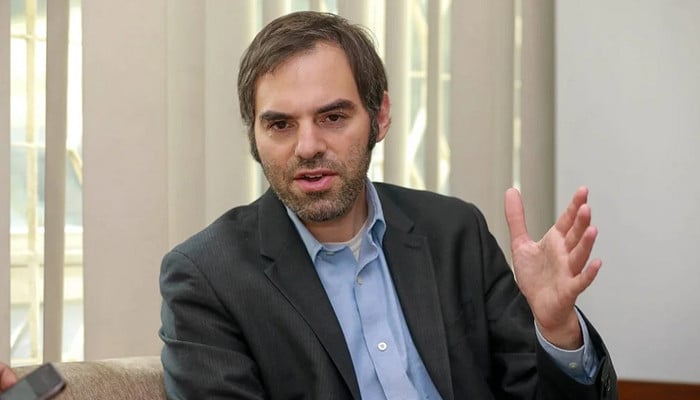
Pakistan has made a significant diplomatic breakthrough in the Middle East conflict, securing a two-week ceasefire between Iran and the United States. Michael Kugelman, a leading expert on South Asia, hailed Pakistan’s achievement as the country’s greatest diplomatic success in recent years, dispelling skepticism and criticism from skeptics and critics alike.
According to Kugelman, Pakistan has proven itself capable of handling complex and high-stakes issues, contrary to earlier perceptions. US President Donald Trump has accepted the two-week ceasefire request made by Prime Minister Shehbaz Sharif. The expert highlighted that the key factor in this development was Pakistan’s effective diplomatic role in preventing a potential catastrophe in Iran.
The ceasefire agreement is seen as a significant step towards a more lasting peace in the region. Prime Minister Shehbaz Sharif stated that the ceasefire is a temporary measure, and the ultimate goal is to achieve a sustainable peace. Pakistan’s Minister of Foreign Affairs, Bilawal Bhutto Zardari, has praised the country’s leadership, saying that it has demonstrated its commitment to peace and stability in the region.
The international community has welcomed Pakistan’s initiative, with Turkish President Recep Tayyip Erdogan praising Prime Minister Shehbaz Sharif’s courageous and insightful leadership in resolving the conflict in the Gulf region. The development has sparked a wave of joy and enthusiasm among Pakistanis around the world, who have been following the developments closely.
However, the situation remains fragile, with the ceasefire agreement facing challenges. Prime Minister Shehbaz Sharif has expressed concerns that ceasefire violations could undermine the spirit of peace and stability in the region. The Pakistani government has also taken steps to address the economic impact of the crisis, including a 12.45 billion rupee burden on electricity consumers in the country.
In a separate development, the Sindh High Court has directed local government representatives to remove banners and flags in their respective areas in compliance with the law. The federal government has also launched a massive youth empowerment program in Sindh, aimed at providing opportunities to young people, students, and graduates.
The crisis has also had an impact on the global economy, with oil prices showing a downward trend in international markets. The US dollar has appreciated against the Pakistani rupee, with the exchange rate showing a slight increase.
In other news, the Islamabad administration has announced a public holiday on April 9 and 10 to mark the success of Pakistan’s diplomatic efforts. The country’s leadership has been praised by international leaders, including US President Donald Trump, who has expressed appreciation for Pakistan’s initiative in resolving the conflict.
In a related development, the Iranian Foreign Minister, Hossein Amir-Abdollahian, has spoken with Pakistan’s Chief of Army Staff and Chief of Defense Staff, General Syed Asim Munir Ahmed, by phone. The international community has welcomed Pakistan’s initiative, with many leaders praising the country’s leadership and its commitment to peace and stability in the region.
