

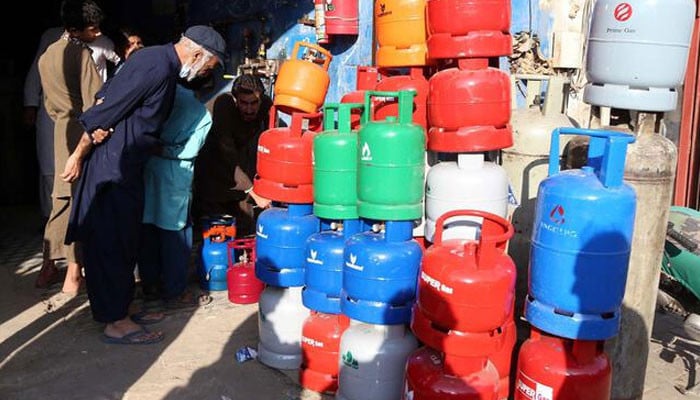
Pakistan is grappling with an acute shortage of Liquefied Petroleum Gas (LPG), with prices skyrocketing to as high as Rs. 500 per kilogram despite the government fixing the rate at Rs. 310 per kilogram. The crisis has left consumers in a state of panic, with many resorting to using cylinders to meet their cooking fuel needs. According to reports, a kilogram of LPG is being sold at a whopping Rs. 200 more than the government-set rate.
The Oil and Gas Regulatory Authority (OGRA) has warned of stern action against dealers and shopkeepers selling LPG at exorbitant prices. Meanwhile, the chairman of the LPG Distributors Association, Abdul Hadi Khan, has attributed the shortage to a decline in supply and high prices of raw materials being paid to distributors.
Interestingly, the Pakistan Bureau of Statistics (PBS) has recently released a report highlighting the surge in prices of petroleum products. According to the report, petrol prices have increased by 48.61% in the past year, while diesel prices have risen by a whopping 101.18% in the same period.
The government has also announced a series of measures to tackle the energy crisis, including the introduction of a new power package for industries and agriculture. However, the opposition has criticized the government’s policies, with the chairman of the Pakistan Public Transport Owners Association calling for a reversal of the recent increase in diesel prices.
In related news, the US and Israeli governments have been engaged in a war of words over the ongoing conflict in Iran. US President Donald Trump has reportedly stated that the deadline for a military strike is imminent, while Israeli officials have claimed that their military is the greatest in the world.
Back home, the government has announced a series of curfews and restrictions to tackle the energy crisis. According to reports, bakeries, restaurants, and marriage halls will be closed at 10 pm from April 7 onwards, as part of the government’s efforts to conserve energy.
The crisis has also had a significant impact on the economy, with the stock market experiencing a decline of 1,308 points in the past week. The Pakistan Stock Exchange (PSX) has also seen a surge in demand for liquefied petroleum gas, with prices reaching as high as Rs. 530 per kilogram in some districts.
In a related development, the government has announced an increase in import duties on textile products, which has been seen as a move to support the local industry. However, the opposition has criticized the move, citing concerns over inflation and the impact on the economy.
The crisis has also highlighted the need for alternative sources of energy, with the government announcing plans to increase the use of renewable energy sources in the country. However, the opposition has criticized the government’s plans, citing concerns over the cost and feasibility of such projects.
In conclusion, Pakistan is facing a severe LPG crisis, with prices skyrocketing and consumers facing a massive shortage. The government has announced a series of measures to tackle the crisis, but the opposition has criticized the move, citing concerns over inflation and the impact on the economy.
