

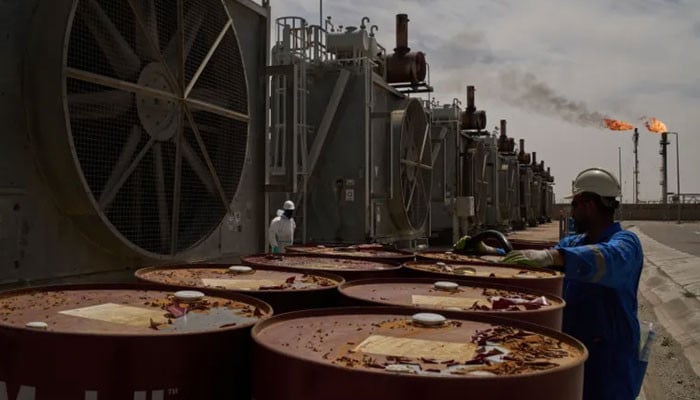
Iran-US tensions have pushed global oil prices to a two-week high, with Brent crude oil surpassing $116 per barrel, a 3% increase. The surge in prices comes as Iran warned of potential US land attacks, with the Iranian parliament’s speaker vowing to respond strongly to any military presence. The escalating tensions in the region have also seen a rise in missile attacks, with Iran-backed Houthis targeting Israel for the first time, and Israel responding with military operations in southern Lebanon.
The global energy crisis has deepened, with oil prices rising by almost 60% since the conflict began. The disruption to global oil supplies has led to rationing in several countries, including Indonesia, where the government has announced that it will limit the number of working days for civil servants to one day a week.
The US has warned that it will target American companies in the region if they are attacked, while Iran has accused the US and Israel of targeting a cancer medicine factory in their airstrikes. The Israeli military has also used advanced technology, including drones and artificial intelligence, to target Iranian forces.
The global economy is bracing for the impact of the conflict, with stock markets in Asia experiencing significant losses. The Japanese Nikkei 225 and South Korean Kospi indices both fell by over 4%. The Strait of Hormuz, a critical waterway for global oil supplies, has been closed by Iran, disrupting global energy markets.
Expert Jeffrey Sachs has warned that the UAE could be drawn into the conflict, putting Dubai and Abu Dhabi at risk. US President Donald Trump has threatened to destroy Iran’s energy infrastructure if the country does not open the Strait of Hormuz by April 6. The US has also proposed a 15-point plan to end the conflict, but Iran has rejected it, calling for a military victory and recognition of its sovereignty over the Strait of Hormuz.
The conflict has sparked a global debate, with China and Pakistan expressing concerns about the situation. The Chinese government has called for restraint, while Pakistan has offered to mediate between Iran and the US. The European Union has also expressed concerns, with EU President Antonio Costa speaking with Iranian President Hassan Rouhani on Tuesday.
The conflict has also led to a rise in anti-American sentiment in the region, with Iran accusing the US of targeting its civilians. The US has denied the allegations, saying that it is targeting Iranian military targets. The conflict has also raised concerns about the humanitarian impact, with many civilians caught in the crossfire.
In a statement, Iranian President Hassan Rouhani said that the country is ready to defend itself against any attack. The US has responded by saying that it will take all necessary measures to protect its interests in the region.
The conflict has also had a significant impact on the global economy, with oil prices soaring and stock markets experiencing significant losses. The global economy is bracing for the impact of the conflict, with many countries warning of the potential consequences.
In a statement, the UAE’s Roads and Transport Authority (RTA) announced the launch of a new self-driving taxi service. The service will be available in Dubai and will use advanced technology to transport passengers.
The conflict has also raised concerns about the safety of civilians in the region. Many have been displaced or injured in the conflict, and the situation remains volatile.
In a statement, the Iranian government said that the US and Israel had targeted a cancer medicine factory in their airstrikes. The US has denied the allegations, saying that it is targeting Iranian military targets.
The conflict has also had a significant impact on the global energy market, with oil prices soaring and stock markets experiencing significant losses. The global economy is bracing for the impact of the conflict, with many countries warning of the potential consequences.
In a statement, the Chinese government said that it is committed to resolving the conflict through diplomatic means. The Chinese Foreign Ministry has called for restraint, while the Pakistani government has offered to mediate between Iran and the US.
The conflict has also raised concerns about the safety of civilians in the region. Many have been displaced or injured in the conflict, and the situation remains volatile.
In a statement, the Iranian government said that it is committed to defending its sovereignty and territorial integrity. The US has responded by saying that it will take all necessary measures to protect its interests in the region.
The conflict has also had a significant impact on the global economy, with oil prices soaring and stock markets experiencing
