

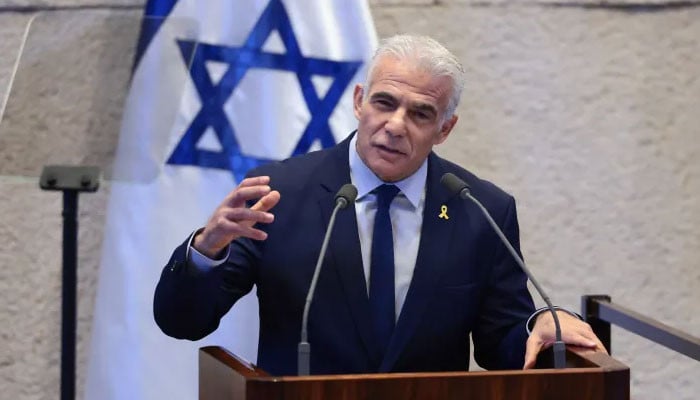
The Israeli government’s strategy in the ongoing war with Iran and Lebanon has come under heavy criticism from the country’s opposition leader, Yair Lapid. In a video statement, Lapid expressed concerns that the Israeli military is being pushed to its limits and that the country is heading towards “security devastation.” He stated that the government lacks a clear strategy, necessary resources, and an adequate number of soldiers to wage war on multiple fronts without causing irreparable harm to Israel.
Lapid’s criticism comes as the Israeli military continues to engage in combat with Iranian missiles and drones, causing widespread destruction in the country. Meanwhile, the mayor of the town of Margaliot near the Lebanese border highlighted the devastating impact of Hezbollah’s attacks on Israel, stating that the town has been severely affected by the conflict.
The Israeli government’s strategy has also been criticized by other officials, including former military chief of staff Gadi Eisenkot, who expressed similar concerns about the country’s ability to sustain the ongoing war. Despite the criticism, Lapid has stated his support for the military’s actions in Gaza, Iran, and Lebanon.
According to reports, the Israeli military has intercepted 398 missiles, destroyed 15 cruise missiles, and 1,872 drones since the start of the war. The conflict has also affected the region’s economy, with the closure of major shipping lanes in the Strait of Hormuz affecting global energy supplies.
In other developments, the Iranian government has condemned the Israeli military’s attacks on Iranian diplomatic missions in Lebanon, labeling them a “heinous crime.” The US government has also announced its plans to send a third naval fleet to the region in support of the ongoing conflict.
Meanwhile, Pakistani officials have been affected by a high-level misinformation campaign, with reports emerging of a coordinated effort to spread false information about the country. The Pakistani government has denied the allegations, stating that the country is committed to maintaining regional stability.
In related news, the Iranian president, Ebrahim Raisi, has reiterated his stance that Iran does not initiate attacks on other countries, despite the ongoing conflict with Israel. The US president, Donald Trump, has also weighed in on the situation, stating that the region is on the cusp of major change.
The conflict has also had far-reaching consequences, with the closure of the Strait of Hormuz affecting global energy supplies. The Strait of Hormuz is a major shipping route, with approximately 20% of the world’s oil and gas passing through it.
In other regional news, the Pakistani government has lifted restrictions on trade with neighboring countries, allowing for the export of goods through land routes to Iran, Azerbaijan, and Central Asia.
