

Iran Tensions and Fuel Price Hike Deal Severe Blow to US President Trump’s Popularity
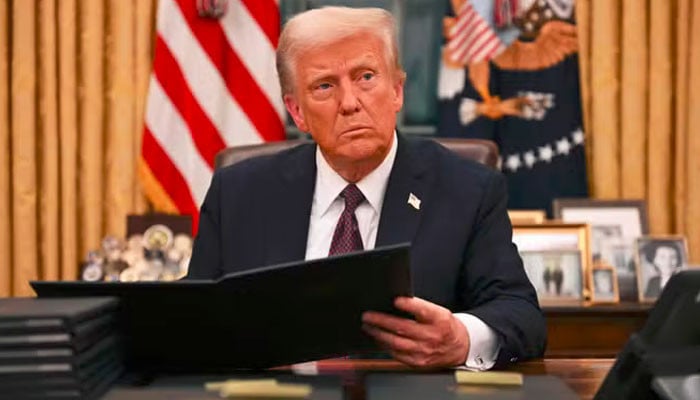
The recent escalation of tensions between the US and Iran, coupled with the sharp hike in fuel prices, has significantly eroded the popularity of US President Donald Trump. A recent online survey conducted by a British news agency revealed that Trump’s public support has dropped to 36 percent, a stark contrast to the 47 percent recorded shortly after he took office. The survey also showed that 61 percent of Americans oppose the US decision to launch airstrikes on Iran, while 35 percent support it.
The ongoing conflict has led to significant economic and environmental consequences, with several countries in the region experiencing fuel shortages and price hikes. In India, the scarcity of gas and petrol has forced the poor to resort to burning wood and coal, highlighting the devastating impact of the crisis on the region’s most vulnerable populations.
The United Nations Secretary-General Antonio Guterres has warned that the situation in the region is spiraling out of control, with the world facing a growing threat of a global conflict. Pakistani Foreign Minister Shah Mehmood Qureshi has confirmed that the country’s Foreign Ministry is in close contact with its counterparts in the region, including Iran, to address the crisis.
In a significant development, Iranian Foreign Minister Mohammad Javad Zarif has held meetings with his counterparts in Pakistan and Egypt, including Pakistani Foreign Minister Shah Mehmood Qureshi and Egyptian Foreign Minister Sameh Shoukry. The Iranian Foreign Ministry has stated that it has rejected US proposals and is working to strengthen its regional alliances.
The crisis has also had a significant impact on global trade, with several major shipping companies, including China’s Cosco, resuming operations after a three-week hiatus. The Iranian government has warned that any US military vessels entering its territorial waters will be targeted.
The conflict has also led to a significant increase in tensions between the US and Turkey, with Turkish President Recep Tayyip Erdogan expressing his support for the Palestinian people and condemning Israeli aggression.
In a separate development, the Iranian government has announced that it will resume oil exports, despite the ongoing crisis. The move is seen as a significant escalation of the conflict and has raised concerns about the potential for further violence in the region.
The crisis has also had a significant impact on the global economy, with several countries experiencing fuel shortages and price hikes. The Indian government has taken steps to mitigate the impact of the crisis on its citizens, including the introduction of a new fuel pricing mechanism.
In a separate development, health experts have warned that a persistent pain in the shoulder could be a sign of a hidden underlying condition, including cancer. The warning comes as the global community grapples with the ongoing crisis in the Middle East.
As the situation continues to unfold, one thing is clear: the world is at a crossroads, and the consequences of the crisis will be far-reaching and devastating.
