

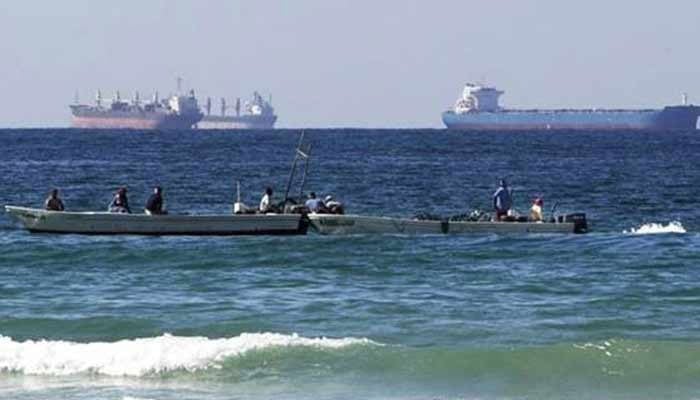
The United Arab Emirates (UAE) and the United States have joined forces to secure the strategic Strait of Hormuz, a crucial waterway that connects the Persian Gulf to the Gulf of Oman and is a vital route for global energy supplies. This development comes as tensions escalate between Iran and the West over the latter’s nuclear program and regional influence.
According to UAE President’s Special Envoy Anwar Gargash, ensuring the security of the global energy supply is a collective responsibility. The UAE has taken swift action to safeguard its interests in the region, with one of the affected aircraft experiencing a fire outbreak, which was subsequently brought under control.
In a separate development, Iran has urged India to allow Iranian ships to pass through the Strait of Hormuz, which has been blocked by Indian warships. India had seized three Iranian oil tankers before the conflict escalated, citing concerns over Tehran’s nuclear program. Currently, 22 Indian warships are stranded in the Strait of Hormuz.
In a separate incident, a missile struck the Al Minhad Airbase in the UAE, where Australian troops are stationed. Fortunately, no Australian personnel were injured in the attack, and all are accounted for. The missile caused minor damage to a residential block and a medical facility.
In a positive development, the Iranian government has announced that it is willing to facilitate the passage of Pakistani ships through the Strait of Hormuz. Pakistani vessels carrying crude oil and gas can now contact the Iranian government to secure safe passage through the vital waterway.
According to tracking data, the first Pakistani ship to navigate the Strait of Hormuz has arrived in Karachi, carrying 8 million liters of crude oil.
In a joint statement, the UAE and its allies condemned the Iranian attack as a violation of international law and a threat to regional stability.
Meanwhile, a plane carrying 101 passengers, including several animals, landed safely in Athens, Greece.
In a significant development, the US has sold advanced defense systems to the UAE, including a long-range radar system. The deal is worth approximately $4.5 billion.
In a rare admission, the Iranian government acknowledged that the war has caused significant damage to its oil infrastructure, with 17% of its export capacity affected.
The conflict has also had far-reaching consequences for the global energy market, with oil prices soaring to record highs. The Iranian government has accused Israel of compromising its military communication systems, which has led to a crisis in its war strategy.
In a separate development, the Bangladesh Islamic Foundation has announced that the Eid al-Fitr celebrations will take place on March 21.
The conflict has also had significant implications for the region, with several countries including the UAE, Saudi Arabia, and the UK announcing joint statements condemning the Iranian attack and pledging support for regional stability.
As the situation continues to unfold, the international community remains on high alert, with the US, UK, and other Western powers calling for a peaceful resolution to the crisis.
