

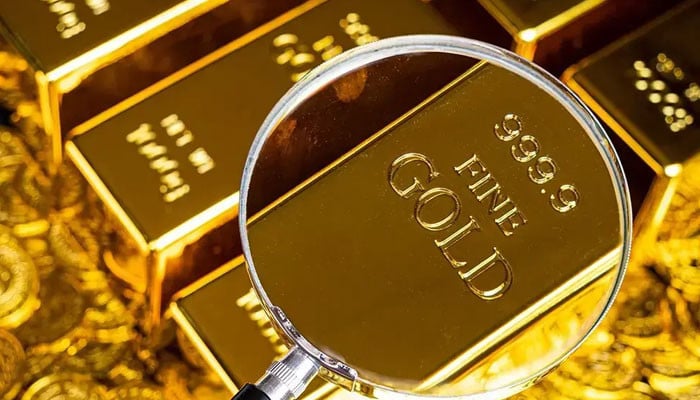
Gold prices have defied expectations by remaining stable in the global market despite the ongoing conflict with Iran and escalating tensions in the Middle East. The prices have shown no significant increase despite the rising hostilities, which is a rare occurrence according to experts. The situation has been further complicated by the US and Israel’s recent attacks on Iran, which has led to increased tensions in the region.
On February 28, the Islamic Revolutionary Guard Corps’ senior advisor, Ibrahim Jafari, announced that Iran would block the Strait of Hormuz, which has resulted in oil prices surpassing $100 per barrel in the global market. However, the global stock market has shown a decline, but gold prices have remained steady.
US President Donald Trump has stated that the US is “way ahead of schedule.” The Arab media reports that the spot gold price remained around $5,001 per ounce on Tuesday, while the US futures gold price reached $5,005 per ounce with a slight increase.
According to experts, investors usually turn to gold as a safe-haven asset during times of war, economic crises, or global uncertainty, which leads to rapid price increases. For example, during the Russia-Ukraine conflict, gold prices saw a significant increase.
However, the experts point out that there are several reasons why gold prices have not increased, including the strength of the US dollar, the high initial price of gold, high volatility, and the risk of rising interest rates. The US recently announced that it would offer a $1 million reward to those who provide information about Iran’s key figures.
Economist Remy Borzu states that gold is no longer considered a safe-haven asset and is being viewed as a speculative investment. According to analysts, significant changes in gold prices can occur if the US Federal Reserve signals a rate cut or if the Iran conflict prolongs and global economic risks increase.
The global gold market has seen a decline in the gold price, with the price falling to $4,767 per ounce. The world’s trade, which relies heavily on the Middle East, is facing significant challenges due to the conflict.
The Strait of Hormuz, which accounts for approximately 20% of the world’s oil supply, has been affected by the tensions, leading to a decline in oil supplies to Asian countries. The global gold market has seen a decline in the gold price, with the price falling to $5,000 per ounce.
Pakistani authorities have reported a decline in the current account surplus to $427 million by February. The State Bank of Pakistan has released figures on foreign investment, showing a decline in the gold price.
The global market has seen a decline in oil prices due to the conflict in the Middle East, which has led to a decline in supplies to Asia. The US and Iran’s conflict has resulted in a decline in oil supplies, which has led to a decline in the global market.
