

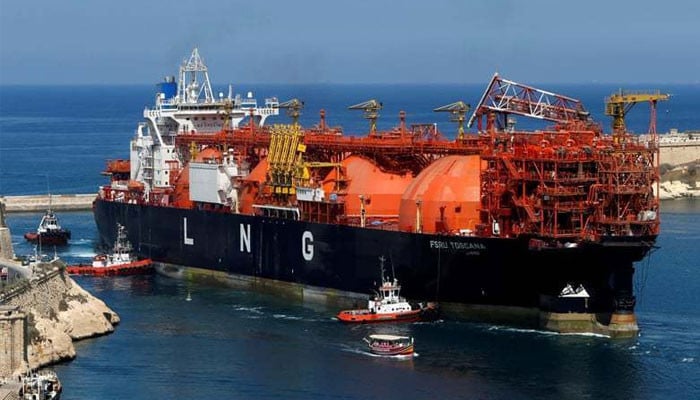
Pakistan is bracing for a severe shortage of liquefied natural gas (LNG) after the country’s authorities announced that LNG supplies would be unavailable from April 14 onwards. The announcement comes as the global market faces unprecedented tensions, with the conflict in the Middle East affecting oil prices and economies worldwide.
In a recent meeting of the Senate’s Standing Committee on Petroleum, chaired by Senator Muhammadon Azam Khan Kakar, authorities revealed that the country’s LNG supplies from Qatar have been suspended indefinitely, effective from March 2. Although two cargo ships had been scheduled to arrive in March, only one has arrived so far, and none are expected to arrive in April.
According to Ministry of Energy officials, the country’s power sector is facing a critical shortage of gas, with supplies dwindling to just 130 million cubic feet per day (MMCFD) from 300 MMCFD. To mitigate the crisis, the government plans to allocate gas supplies to domestic consumers, with the power sector’s requirements to be met through alternative sources.
In a significant development, the Ministry of Energy has announced that it will explore alternative sources of LNG, including imports from Azerbaijan, which could be sourced at a competitive price of $24 per barrel. The move is expected to ease the burden on the power sector and provide a respite to the country’s economy.
The government’s announcement has sent shockwaves through the country’s economy, with the rupee experiencing a significant decline against the US dollar. The conflict in the Middle East has also led to a surge in global oil prices, which is likely to impact the country’s trade deficit and economic growth.
Meanwhile, the global gold market has seen a significant decline, with the price of gold decreasing by $18 per ounce to $5,000. The conflict in the Middle East has also led to a surge in demand for gold, with investors seeking safe-haven assets amid uncertainty.
In related news, the Pakistan Bourses have seen a significant decline in gold prices, with the Karachi Stock Exchange experiencing a decline of over 1% in gold prices. The country’s rupee has also seen a significant decline, with the exchange rate reaching a record low of 160 against the US dollar.
The crisis has sparked concerns among investors, with experts warning of a potential economic downturn. The government, however, remains optimistic, with officials confident that the country’s economy will weather the storm.
As the country grapples with the crisis, the government has announced a series of measures to mitigate the impact of the LNG shortage, including the allocation of gas supplies to domestic consumers and the exploration of alternative sources of LNG. The move is expected to ease the burden on the power sector and provide a respite to the country’s economy.
In other news, Pakistan’s rupee has seen a significant decline against the US dollar, with the exchange rate reaching a record low of 160. The country’s gold prices have also seen a significant decline, with the Karachi Stock Exchange experiencing a decline of over 1%.
The conflict in the Middle East has also led to a surge in demand for gold, with investors seeking safe-haven assets amid uncertainty. The global gold market has seen a significant decline, with the price of gold decreasing by $18 per ounce to $5,000.
As the country navigates the crisis, the government remains committed to ensuring the stability of the economy and the well-being of its citizens. The move to allocate gas supplies to domestic consumers and explore alternative sources of LNG is expected to ease the burden on the power sector and provide a respite to the country’s economy.
