

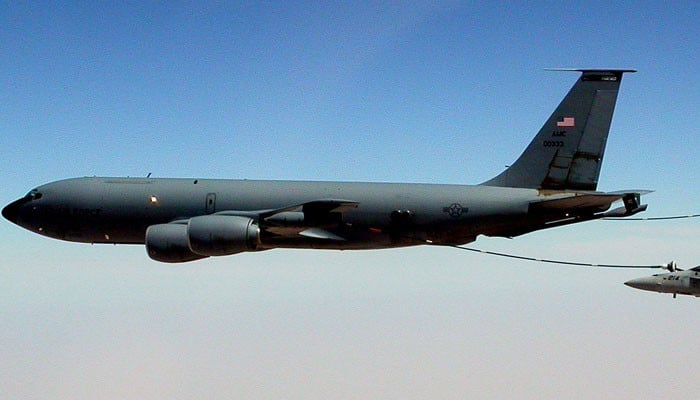
The diplomatic tensions between Iran and its regional adversaries have reached a boiling point, with Switzerland announcing a ban on US military flights within its airspace. This move comes in the backdrop of escalating tensions between Iran and the US, with Washington and its allies accusing Tehran of aggression.
In a statement, the Swiss government confirmed that it would not allow US military flights to use its airspace, citing concerns over Iran’s military activities in the region. The move is seen as a significant escalation in the ongoing conflict, with the US and its allies accusing Iran of launching a series of missile and drone attacks against their forces in the region.
Meanwhile, Iran has warned regional countries against participating in what it calls a “false flag operation” by the US. The Iranian government has also accused the US of using Iranian unmanned aerial vehicles (UAVs) to prepare for a potential false flag operation.
The US has denied these allegations, with a US news website reporting that Israel’s defense forces are experiencing a shortage of defensive missiles following Iran’s recent missile and drone attacks. The report also claimed that the US and its allies are working together to ensure the safe passage of ships through the Strait of Hormuz.
In a separate development, the Bahraini Ministry of Interior announced the arrest of five individuals suspected of providing sensitive information to Iran’s Revolutionary Guard Corps. The move is seen as part of a broader effort to counter Iran’s influence in the region.
The conflict between Iran and its adversaries has also had a humanitarian impact, with Pope Francis calling for an end to the violence in the Middle East. In his weekly address, the Pope expressed concern over the suffering of civilians in the region, saying that the situation has become “intolerable.”
The Iranian Revolutionary Guard Corps has claimed that it has targeted a number of enemy sites in the region, using its multi-payload, multi-target missiles. The group has also accused the US and its allies of planning a false flag operation against Iran.
The Organization of Islamic Cooperation (OIC) has called on international organizations, media outlets, and civil society to take action against Islamophobia. The OIC has also expressed concern over the humanitarian impact of the conflict in the Middle East.
In another development, a Palestinian official reported that an Israeli soldier had opened fire on a car in the occupied West Bank, killing four members of the same family. The incident sparked outrage on social media, with many calling for an end to the violence in the region.
The conflict between Iran and its adversaries has also had an economic impact, with the United Arab Emirates announcing that it would not participate in a US-led naval exercise in the Gulf. The move is seen as a response to the US’s increasing military presence in the region.
In a separate development, the Pakistani cricket team’s former captain, Sarfaraz Ahmed, has been awarded an honorary shield for his services to the team. The move is seen as a gesture of appreciation for Ahmed’s contributions to Pakistani cricket.
As the conflict in the Middle East continues to escalate, many are left wondering when the fighting will end. One thing is certain, however: the situation has become increasingly complex, with multiple sides vying for control and influence in the region.
