

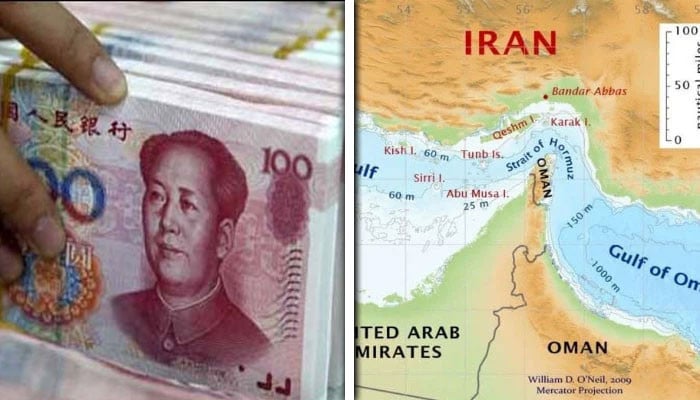
The Iranian government is reportedly considering granting permission to oil tankers trading in yuan to pass through the Strait of Hormuz, according to American media. International market transactions involving oil are largely conducted in US dollars, but Iran is exploring the possibility of allowing a limited number of tankers to pass through the strait if they trade in yuan. This move comes after Iran’s decision to suspend oil exports due to the economic sanctions imposed by the US and its allies.
The development follows a recent announcement by the Iranian government that it would impose rationing on petrol and diesel sales in the country due to the economic pressure caused by the Strait of Hormuz blockade. Meanwhile, France and Italy have reached out to the Iranian government to secure the safe passage of their naval ships through the strait.
According to a report by the Financial Times, European countries are eager to restore energy supplies without escalating the conflict further. Despite the challenges, there has been no significant disruption to the provision of essential public services, according to Iranian Vice President Mohammad Mokhber.
The latest details on the casualties in the 15-day conflict between the US, Israel, and Iran reveal that 106 children and 65 women were among the dead. The Iranian government claims that 43,000 homes were destroyed in the conflict, with 36,500 of those being residential units.
The conflict has also led to a fuel shortage in India, with the country’s energy crisis exacerbated by the volatile situation in the Middle East. The US embassy in Baghdad was attacked for the second time since the start of the conflict, highlighting the escalating tensions in the region.
The Chinese government has urged Pakistan and Afghanistan to push for an immediate ceasefire and resolve their differences through dialogue. China has pledged to play an active role in reducing tensions between the two countries.
The conflict has also taken a toll on the Palestinians in Gaza, where a dust storm has exacerbated the existing problems caused by the war. The US Senate has condemned the Iranian attack on the Saudi Prince Sultan Air Base, where five American Air Force refueling planes were destroyed.
US President Donald Trump has expressed hope that countries like China, France, Japan, South Korea, the UK, and others will send warships to the region. The International Cricket Council has banned Pakistani cricketer Salman Ali Agha for a level 1 breach of the code of conduct, and has imposed a one demerit point on him.
In a separate development, the Pakistani government has announced plans to cut salaries of government and semi-autonomous employees by 5-30% to implement austerity measures and provide relief to the public. Despite the challenges, there has been no significant disruption to the provision of essential public services, according to Iranian Vice President Mohammad Mokhber.
Pakistan Cricket Board (PCB) has announced that Pakistani cricketer Hussain Talat suffered a dislocated shoulder during a match against Bangladesh. The Strait of Hormuz remains a critical waterway for the global oil trade, and any disruption to it has significant economic implications.
