

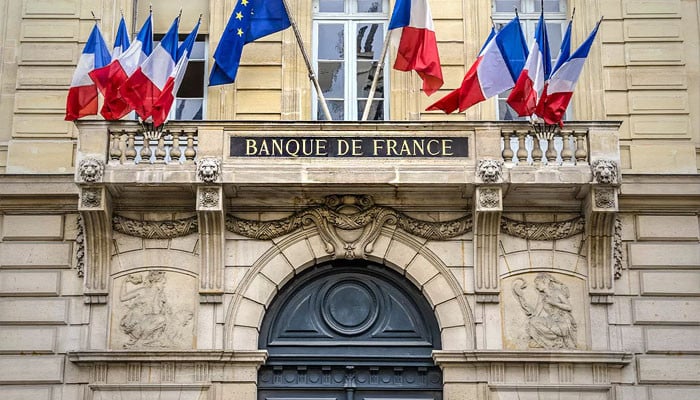
France’s Central Bank Governor, François Villeroy de Galhau, has sounded an alarm about the rapidly increasing fuel prices, cautioning that new subsidies to mitigate the impact might be avoided. During a recent media interview, the Governor stated that the country has no more funds to support new subsidies.
The increasing fuel prices have been attributed to the ongoing tensions in the Middle East, which have led to a volatility in the global oil market. The prices have recently surged past the two-euro mark (approximately 2.3 US dollars) per liter. The conflict between Israel and Iran has affected not only the regional countries like Pakistan, Indonesia, but also the European nations such as the UK, where a critical situation is unfolding.
The Central Bank Governor warned that the opposition parties and labor unions’ demands for tax cuts, fuel vouchers, or price caps could further strain the country’s budget deficit, which currently stands at approximately 5%. The Governor cautioned that this could lead to an increase in the deficit, which would force the government to make additional payments on its residential and commercial loans.
In an alternative approach, the Governor emphasized the importance of energy self-sufficiency and investment in energy transition as a long-term and sustainable solution. He stated that instead of short-term subsidies, the country should focus on developing its own energy resources and transitioning to cleaner energy sources.
The ongoing tensions in the Middle East could also impact the French economy, potentially leading to a slight increase in inflation and a slowdown in economic growth. The Central Bank Governor forecast that the country’s economic growth is likely to remain between 0.2% and 0.3% in the first quarter of the year, with a projected overall growth rate of approximately 1% in 2026.
The conflict has also had a significant impact on the global energy market, with the crisis in Lebanon resulting in the deaths of 106 children and 65 women, according to the country’s Health Ministry. The Iranian government reported that 43,000 homes, including 36,500 residential units, have been destroyed in the conflict.
The situation has also led to a crisis in India, where the supply of liquefied petroleum gas (LPG) has been affected. The country’s Foreign Ministry has called on Pakistan and Afghanistan to engage in urgent peace talks to resolve their differences and reduce tensions in the region. China has reaffirmed its commitment to playing an active role in reducing tensions between the two countries.
The conflict has also led to a humanitarian crisis in Gaza, where a sandstorm has exacerbated the difficulties faced by Palestinians affected by the Israeli conflict. The US Senate has confirmed that the US military launched a large-scale operation in the Kharg Island, destroying Iranian naval facilities and equipment. The operation has been described as a retaliation against Iranian missile attacks.
The situation has also led to a crisis in the Indian Ocean, where Iranian missiles have been fired towards Japan, while the US and South Korean military forces were conducting annual joint exercises. The Iranian Foreign Minister, Abbas Araghchi, has accused the US of coercing India to stop buying oil from Russia, a move that has left the European countries with a false sense of security. The US has now been forced to beg for Russian oil, two weeks into the conflict.
In related news, the International Cricket Council (ICC) has officially reprimanded Pakistani cricketer Salman Ali Agha for breaching the code of conduct, awarding him one demerit point. The Pakistani Prime Minister, Shehbaz Sharif, has announced that the government will implement budget-cutting measures, including reducing the salaries of employees in government and semi-government institutions by 5-30%. The Pakistan Cricket Board (PCB) has reported that Pakistan’s batsman, Hussain Talat, has suffered a dislocated shoulder while fielding during the second ODI against Bangladesh.
