

Article:
The Pakistan Meteorological Department has warned that the Middle East conflict, particularly the alleged intense airstrikes by Israel and the US on oil reserves in Iran, may lead to severe environmental consequences for the country. However, the impacts of this crisis have not yet been directly felt in Pakistan.
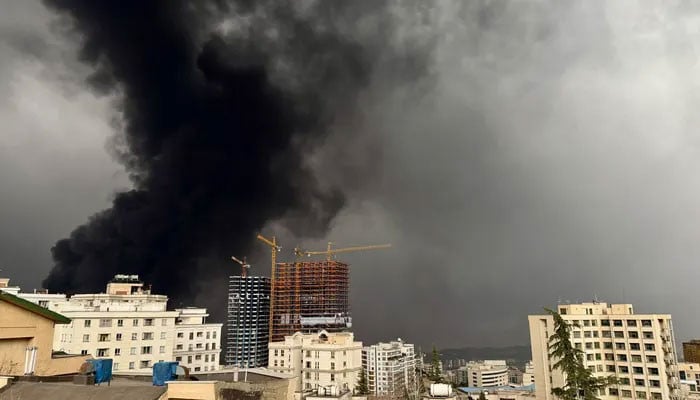
According to the Met Office, black acid rain (black acidic precipitation) reported in Tehran and its surrounding areas could be a possible sign of this environmental pollution. However, data from Iran is not yet available in full due to the internet service being disrupted by the war, although the situation is being continuously monitored through satellite data.
The Met Office noted that Tehran is geographically located northwest of Pakistan, and if the pollution effects spread, they are more likely to affect Afghanistan. The airstrikes on 30 oil reserves in Iran by Israel have led to tensions between the US and Israel.
It is also worth noting that Iran’s southern region is close to Pakistan’s Balochistan province, but the environmental impact of pollution in Tehran has not yet been seen in a large area. The burning of oil reserves can lead to an increase in carbon emissions, which can cause an increase in temperature on the upper atmospheric level, and increased humidity retention in the atmosphere, eventually affecting the precipitation system in the surrounding areas in the future.
The Met Office has said that polluted particles and gases from Iran, carried by western winds, can reach Pakistan’s western regions, which may adversely affect the air quality in those areas. Heavy rain and thunderstorms are expected in the upper areas of the country from 9 to 12 March, and western winds are expected to enter the western parts of the country from tomorrow evening.
In the province of Khyber Pakhtunkhwa, Gilgit-Baltistan, and Azad Jammu and Kashmir, rain is expected to occur intermittently from 9 to 12 March. Islamabad, Muree, Galyat, and the Potohar region are also expected to experience light to moderate rain from 9 to 11 March. Daytime temperatures in the upper areas are expected to drop by 3-4 degrees due to rainfall.
The government has taken measures to mitigate the effects of the petroleum crisis. The Ministry of Finance has briefed the Council of Common Interests (CCI) on the global situation, petroleum products conservation, and austerity measures on government level.
The Prime Minister, Shehbaz Sharif, announced that 60% of government vehicles would be taken off the road to conserve fuel. The government has also directed the provinces to reduce fuel consumption.
The situation is being monitored closely by the National Disaster Management Authority (NDMA) and the Pakistan Army. The Chairman of the Pakistan Tehreek-e-Insaf (PTI), Imran Khan, has expressed his concern over the situation and has appealed to the international community to take notice of the crisis.
The opposition parties, including the Pakistan Peoples Party (PPP) and the Pakistan Muslim League-Nawaz (PML-N), have also expressed their concern over the situation and have demanded that the government take immediate action to mitigate the effects of the crisis.
The government has also taken steps to ensure the security of the country. The Prime Minister has announced that the police will set up checkpoints to ensure the security of the country and to prevent any potential threats.
The situation is expected to remain tense in the coming days, and the government is urging citizens to remain calm and to avoid any unnecessary travel.
