

Yesterday It Was the Taliban and the World Cried Out
Today the Killers Have Changed: Does Terrorism Change When Its Name Changes?
By Raja Zahid Akhtar Khanzada
This video does not belong to a nation. It does not belong to a flag.
It belongs to the conscience of humanity.
There are moments when an image stops being just an image. It becomes a question. A quiet but relentless question that travels across borders, through languages, through politics, and finally arrives at the door of the human conscience.
This video is one of those questions.
It was an ordinary morning in the Iranian city of Minab.
In the courtyard of Shajra Tayyiba Elementary School, the day likely began as all school mornings begin. The laughter of young girls echoing across the yard. A teacher calling attendance. Small hands opening notebooks. Somewhere a child reciting a poem in the morning assembly. Somewhere another child whispering to her friend that her homework was finally finished.
These small moments may seem ordinary, but they are in fact the quiet foundation of civilization. When children walk into a school, humanity is placing its faith in the future.
And then the sky opened.
Not with rain.
With fire.
In a matter of moments, one hundred and sixty-eight young lives were lifted out of the fragile alphabet of childhood and dropped into the silence of death.
Reports circulating in the region suggest that the strike was the result of a joint military operation by Israel and the United States. According to available figures, the broader war in Iran has already claimed seven hundred and eighty-seven lives.
Yet in much of the Western media, these numbers barely echo. There is little discussion of a missile striking a school. Even less acknowledgment of the children who died there. And almost no visible sense of moral discomfort.
Meanwhile, in Minab, the city moved differently today.
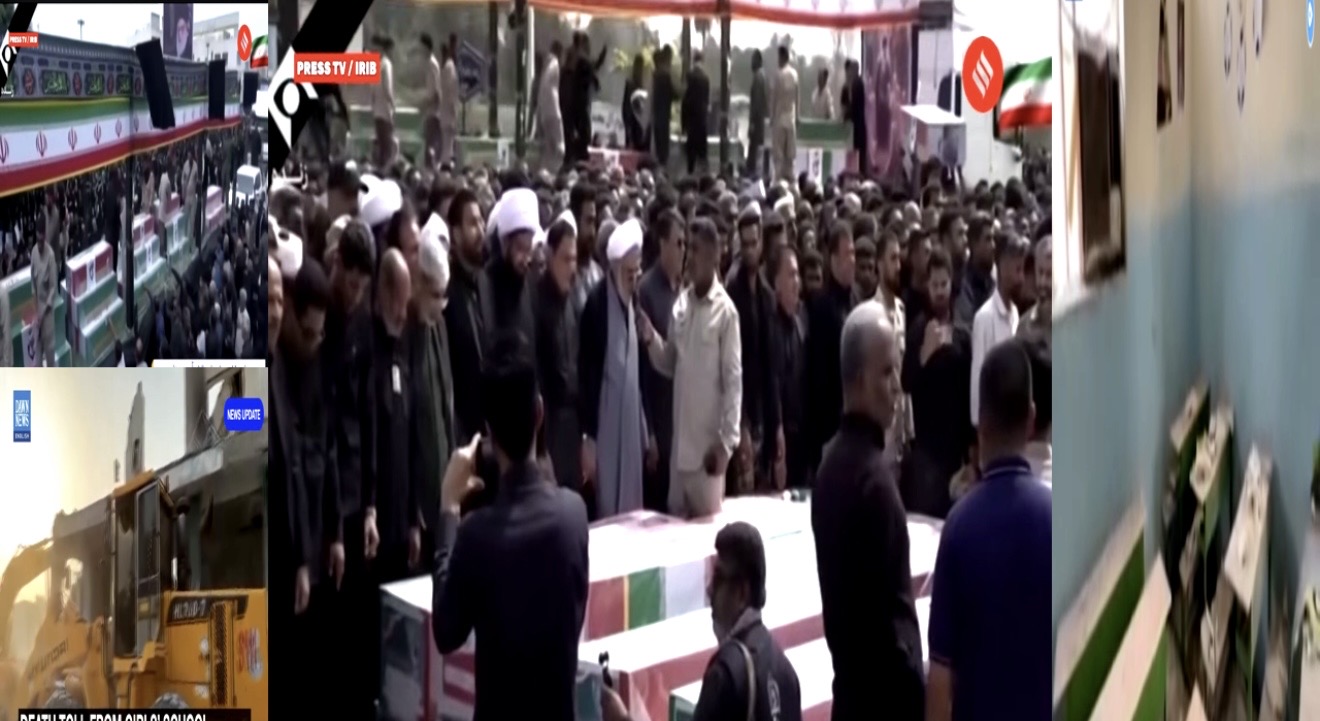
Small coffins passed slowly through its streets.
Inside each white shroud was a smile that had not yet learned how cruel the world can be. Inside was an unfinished dream. Inside was a sentence that perhaps would have been written the next day as homework.
I watched the video of their school bags.
Between textbooks lay small toys. In their notebooks were careful lines of handwriting where these children had begun to write their hopes. The ribbons in their hair were still tied.
But their breathing had stopped.
The parents were not simply crying.
They were breaking.
One father stood clutching his daughter’s school bag against his chest, as if by holding it tightly enough he might force time to turn backward. A mother’s lips trembled, perhaps repeating the last words she heard that morning, words that now echo through the empty rooms of her life:
“Mom, I’m going to school.”
History is a strange witness.
When the Taliban attacked schoolgirls years ago, the world erupted with outrage. Condemnations arrived from every corner of the globe. Politicians spoke. Media outlets raised their voices. People lit candles in cities thousands of miles away.
We did the same here in the United States. We stood in solidarity with those children. We condemned the brutality. The wounded Pakistani schoolgirl Malala Yousafzai became a global symbol of courage and later received the Nobel Peace Prize.
At that moment, the identity of the oppressor was clear, and therefore the language of justice was loud.
Today even Malala has spoken out about the deaths of these children.
But much of the Western world has fallen strangely silent.
The missiles may have been fired by Israel, but the blood does not belong to one country alone. Its stain reaches every conscience that dares to look away.
Because the names may have changed.
But the coffins have not.
The tears have not.
The innocent faces have not.
Which leaves us with a question both simple and unbearable.
Does the world only recognize suffering when it approves of the identity of the perpetrator? Does pain require the correct political label before it is allowed to matter?
The question is not who fired the missile.
The deeper question is what crime innocence committed.
These girls did not understand geopolitics.
They understood letters.
They understood colors.
They understood the quiet joy of learning something new.
War, to them, was only a word adults used in distant conversations.
And yet today that word has been written across their graves.
Tomorrow the headlines will change. Analysts will move on to new arguments. The machinery of global politics will continue turning.
But in Minab, time has stopped.
In homes where school bags now lie untouched, the clock remains frozen at a single moment. The moment a young voice stepped through the doorway, turned back briefly, and said with the innocent certainty of childhood:
“Mom, I’m going to school.”
And so one question remains.
If the name of terrorism changes, does terrorism itself disappear?
Known for his forthright journalism and incisive analysis, Khanzada has written extensively on geopolitics, diplomacy, human rights, and the concerns of overseas Pakistanis. This article has been specially translated into Spanish from his original Urdu column.
