

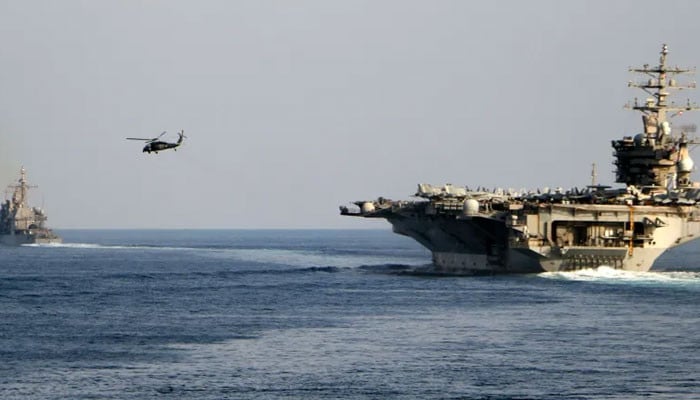
The Iranian Revolutionary Guard Corps (IRGC) has announced that it will block the Strait of Hormuz, a critical waterway that connects the Persian Gulf to the Gulf of Oman, and will target any vessels attempting to pass through it. This move comes in response to recent airstrikes by Israel and the US, which have resulted in the deaths of several high-ranking Iranian officials, including Supreme Leader Ayatollah Ali Khamenei’s representative.
According to the Iranian state media, IRGC advisor Ibrahim Jafari stated that any vessel attempting to pass through the strait will be destroyed by the Iranian Navy and the IRGC. Iran has issued a stern warning that it will halt oil shipments from the region and target oil pipelines, a move that could lead to a significant increase in global energy prices.
The Strait of Hormuz is a critical waterway that accounts for approximately 20% of the world’s oil exports, and any disruption to the flow of oil could have a devastating impact on the global economy. In response to the Iranian threat, Saudi Arabia has clarified that it will not attack Iranian oil installations.
The region is already experiencing a significant increase in energy prices, with natural gas prices in Europe rising by nearly 50% and in Asia by 40% following the attacks on Qatar’s energy infrastructure. Saudi Arabia’s Abqaiq oil processing facility, which has a daily capacity of over 5 million barrels, was also targeted by drones, which were successfully intercepted by the Saudi defense system.
The situation has sparked a war of words between Iran and its regional allies, with Iran warning that any country attempting to use its airspace to launch attacks will be targeted. The US has announced that it will increase its military presence in the region, with Secretary of Defense Mark Esper stating that the US will not hesitate to use military force to protect its interests.
Meanwhile, Russia has warned that the conflict could lead to a nuclear arms race in the Middle East, while the US has stated that it will consider a “ground invasion” of Iran if necessary. The US has also announced that it will provide military aid to its allies in the region, including Saudi Arabia and the UAE.
The situation has also sparked a diplomatic crisis, with Iran’s Supreme Leader Ayatollah Ali Khamenei warning that any country attempting to use its airspace to launch attacks will be targeted. The US has also stated that it will not allow Iran to use its airspace to launch attacks, while the UAE has announced that it will not allow the US to use its airspace to launch attacks on Iran.
The conflict has also sparked a humanitarian crisis, with the US announcing that it will increase its humanitarian aid to the region. The US has also stated that it will provide medical assistance to any Iranian citizens injured in the conflict.
As the situation continues to escalate, the world waits with bated breath to see how it will unfold. One thing is certain, however: the conflict has the potential to have far-reaching consequences for the global economy and could lead to a significant increase in energy prices.
