

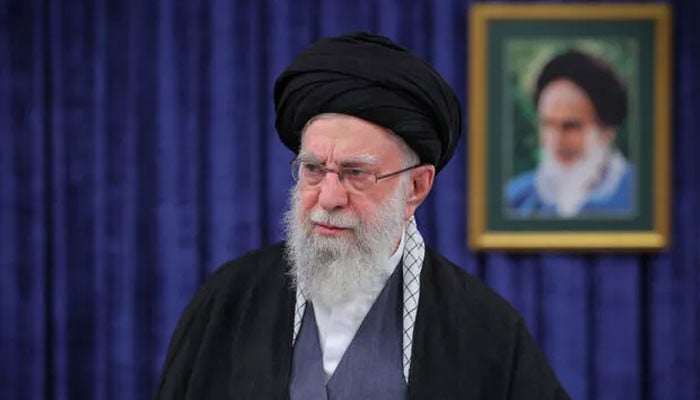
Iran’s Supreme Leader Ali Khamenei’s passing has led to the appointment of Ali Reza Arafi to the interim council responsible for performing the Supreme Leader’s duties. However, the country is now faced with the task of electing a new Supreme Leader. For four decades, Khamenei led Iran, but before his passing, he did not appoint a formal successor. Nevertheless, Iran’s constitution provides a clear mechanism for ensuring the continuity of leadership.
According to Article 111 of the Iranian Constitution, the Assembly of Experts, comprising 88 senior clerics, is bound to expedite the appointment and announcement of a new Supreme Leader in the event of the Supreme Leader’s death, resignation, or removal. For the next few weeks, an interim council will assume leadership responsibilities until a new Supreme Leader is elected.
The interim council will comprise the President, the Head of the Judiciary, and a cleric from the Guardian Council, which will be appointed by the Expediency Discernment Council. One of Khamenei’s advisors, Mohammad Mehdi Motahari, stated that the three-member interim council would be responsible for overseeing the transition, comprising President Ebrahim Raisi, Head of the Judiciary Gholam-Hossein Mohseni-Ejei, and the Secretary General of the Guardian Council.
The interim council will exercise the Supreme Leader’s powers until the Assembly of Experts finalizes the appointment of a new leader and announces it. This process is expected to be challenging, especially with the current security situation and the potential for further action by the United States and Israel.
The Iranian Constitution requires the new Supreme Leader to be a man, a Shia cleric, possess political insight, and possess moral authority, as well as demonstrate loyalty to the Islamic Republic. Amidst the ongoing tensions, the US and Israel continue to target Iranian aircraft and drones.
In a related development, Iranian Supreme Leader’s wife, Mansoureh Bagherzadeh, has been reportedly injured in the US and Israeli strikes. Saudi Arabia has expressed its commitment to diplomatic efforts aimed at reaching a reliable agreement with Iran. Historical Golestan Palace in Tehran has reportedly suffered damage following recent US and Israeli strikes.
In a separate development, Afghanistan’s Amaj news agency reported that several high-ranking Taliban officials have relocated to Bamiyan Province due to concerns about Pakistani airstrikes. A recent survey revealed that a clear majority of Americans do not support the ongoing conflict.
Iranian Red Crescent Society has reported that 131 cities were targeted in the US and Israeli strikes. Amidst the rising tensions, the US military continues to target Iranian aircraft and drones.
