

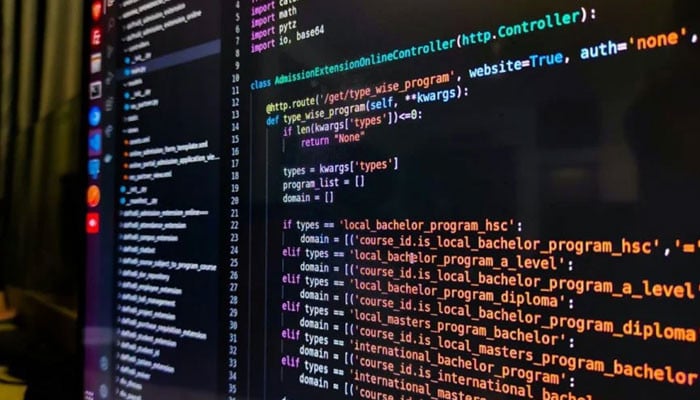
A recent report by American security company Veracode has revealed that the rapid development of software, aided by artificial intelligence (AI), is increasing cybersecurity issues. The report, titled “State of Software Security,” highlights that the speed at which new vulnerabilities are being discovered in software is outpacing the rate at which they are being fixed.
The report analyzed 1.6 million applications on Veracode’s cloud platform and found that the number of new vulnerabilities being discovered is higher than the rate at which they are being rectified. This has resulted in a growing security gap worldwide. The report defines “security debt” as the accumulation of vulnerabilities that have not been addressed for over a year, affecting 82% of companies, up from 74% last year.
The report also found that critical vulnerabilities have increased from 8.3% to 11.3%. The analysis was done through static and dynamic testing, software composition analysis, and manual penetration testing. While new tools are discovering more vulnerabilities than before, the real issue lies in the failure to promptly address these vulnerabilities.
The report suggests that AI-driven development of new code is not keeping pace with security rectifications. Countries such as the UAE, Singapore, and Norway have taken the lead in AI adoption. The complexity of AI-generated code also makes it more challenging to fix. On the other hand, AI tools can be used to identify security vulnerabilities and automate fixes, but this can also introduce new risks such as false positives and zero-day exploits.
The report also notes that open-source software has seen a slight decrease in vulnerability numbers but overall, the burden of security issues continues to grow. In other news, Afghanistan has initiated talks with Pakistan just 24 hours before the war’s completion. The historic moment has been captured on social media, promoting unity. The Malaysian Prime Minister Anwar Ibrahim has expressed concern over the escalating tensions between Pakistan and Afghanistan.
