

Paper Lanterns in a War Zone
By Raja Zahid Akhtar Khanzada
As Ramadan approaches, Muslims across the world prepare for a sacred month. In cities from Jakarta to Dallas, families shop for dates and lanterns. Mosques ready their rows for the first night of Taraweeh. Homes glow softly with anticipation and prayer.
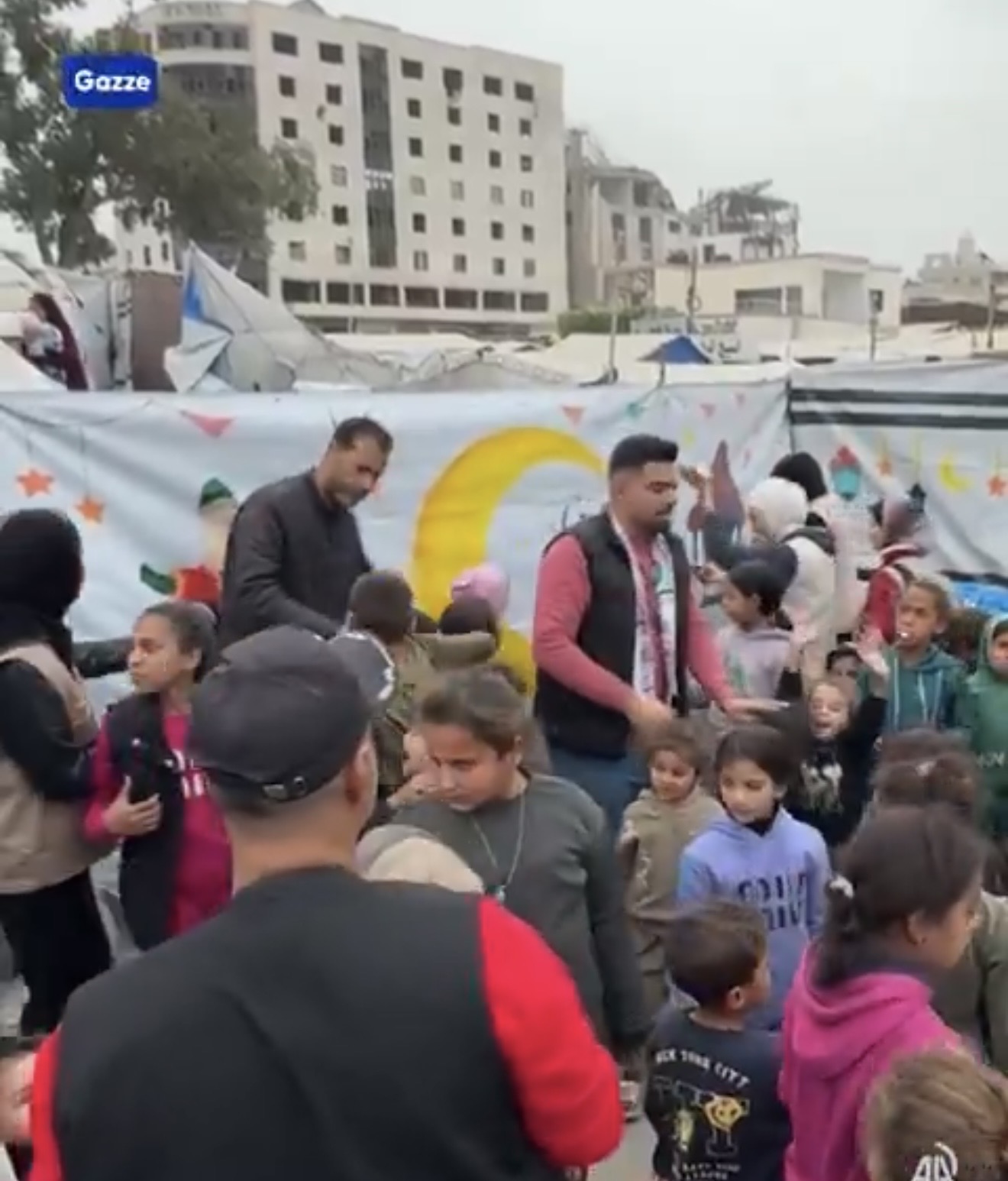
Then a video appears on my phone. It is from Gaza.
In a place where electricity flickers and homes have collapsed into dust, displaced children are decorating their tents with paper lanterns. They cannot hang glass lamps or string electric lights. Instead, they cut colored paper, draw crescent moons and stars, and tape their handmade lanterns to the thin fabric walls of their shelters.
These lanterns do not burn with electricity. They burn with imagination. They glow with defiance. They shine with hope pressed between small fingers still trembling from loss. When strips of colored paper sway against a canvas tent, it feels as if light itself is insisting on survival.
More than seventy thousand lives have been lost. Entire neighborhoods have been erased. Streets that once echoed with laughter now lie buried under rubble. And yet, faith remains.
These children have reminded the world that belief is not merely ritual. It is resilience. It is the power to create light even when the sky is thick with smoke and the ground is layered in ash.
I write this not only as a journalist, but as a human rights advocate. In Pakistan, I raised my voice for religious minorities, for Hindus and Christians whose rights were often overlooked. I learned that oppression does not belong to one faith or one nationality. It is simply oppression. And a tear falling from the eye of a victim carries no religious identity. It is simply human.
In the United States, my association with global human rights organizations, including Amnesty International, reinforced a truth I have long held: peace is not a slogan. It is a responsibility. It is a commitment that must transcend borders and politics.
The children of Gaza are holding up a mirror to us. They are telling us that Ramadan is not only about celebration. It is about patience. It is about feeling the hunger of others, not just fasting from dawn to dusk.
When they decorate their tents with paper lanterns, they are writing a letter to the world. The message is simple and piercing: Do not forget us. Do not reduce us to headlines. See us as human beings.
There is something profoundly unsettling about this contrast. In one part of the world, lanterns are decorative luxuries. In another, they are fragile symbols of survival. Technology has advanced at breathtaking speed, yet compassion often lags behind. Power speaks loudly, while the cries of the vulnerable struggle to be heard.
We who claim to believe in peace must ask ourselves uncomfortable questions. What does faith demand of us? What does humanity require? Is it enough to watch, to scroll, to move on?
Every child deserves a childhood free from fear. Every mother deserves to see her child smile, not buried. Every city deserves lights that signify celebration, not flames that signal destruction.
This Ramadan, my prayer is that the paper lanterns of Gaza never go dark. That the fragile art on tent walls will one day give way to real homes, real streets, real safety. That the courage of these children will awaken a conscience far beyond the boundaries of their shattered land.
If children surrounded by rubble can still create light, then perhaps we, surrounded by comfort, can create justice.
And perhaps then this world will finally begin to resemble what it claims to be: a home for humanity, not a battlefield of fear.
