

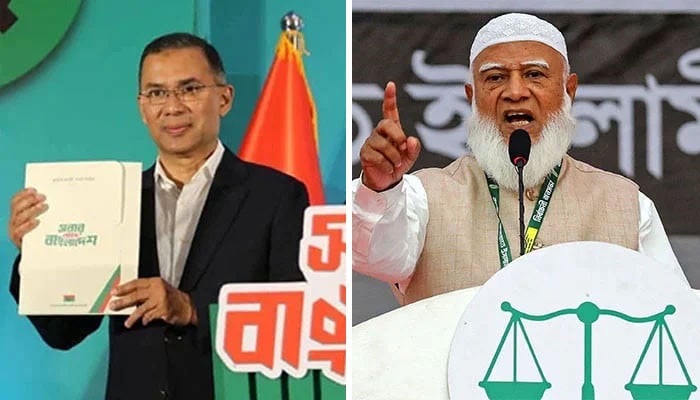
The Bangladesh Nationalist Party (BNP) appears to be leading with a clear majority in the 13th parliamentary elections held in Bangladesh, according to reports from the Bangladeshi media. The party has secured 149 seats, followed by the Jamaat-e-Islami and its allies with 39 seats. The Nationalist Party of Bangladesh, led by Tarique Rahman, son of former Prime Minister Khaleda Zia, has won 152 seats.
The elections were held for 299 seats in the Bangladeshi Parliament, with a total of 11,43,845 postal votes received by the returning officers. The postal voting was conducted for 4,95,551 voters living abroad and 6,48,294 voters living in Bangladesh. The electoral commission reported that 66% of voters cast their ballots in favor of the proposed constitutional reforms, while 34% voted against it.
The BNP chairman, Tarique Rahman, said that the priority of his party is to maintain peace and stability in the country, and to ensure that the women, who make up half of the population, are given due attention. The leader of the Jamaat-e-Islami, Shafiqur Rahman, said that the election is a turning point for the country, and that the party will accept the results if the voting is free and fair.
The leader of the Nationalist Party of Bangladesh, Nahida Islam, said that she cast her vote without any difficulty for the first time in her life. Shahjir Mir, a Facebook user, congratulated his opponent, Nasiruddin Chowdhury, on his win.
The election commission reported that the BNP and its allies won 149 seats, while the Jamaat-e-Islami and its allies won 39 seats. The Nationalist Party of Bangladesh won 152 seats, with Tarique Rahman winning both the Dhaka and Bogra seats.
The elections were marked by allegations of vote rigging and attempts to manipulate the vote count. The BNP chairman, Tarique Rahman, said that his party will accept the results if they are free and fair, while the leader of the Jamaat-e-Islami, Shafiqur Rahman, said that the party will accept the results if the voting is free and fair.
The results of the election are as follows:
* BNP and allies: 149 seats
* Jamaat-e-Islami and allies: 39 seats
* Nationalist Party of Bangladesh: 152 seats
The elections were held for 299 seats in the Bangladeshi Parliament, with a total of 11,43,845 postal votes received by the returning officers. The postal voting was conducted for 4,95,551 voters living abroad and 6,48,294 voters living in Bangladesh.
The election commission reported that 66% of voters cast their ballots in favor of the proposed constitutional reforms, while 34% voted against it. The results of the referendum are as follows:
* In favor of the proposed constitutional reforms: 66%
* Against the proposed constitutional reforms: 34%
The proposed constitutional reforms include the introduction of a unicameral parliament, the abolition of the caretaker government, and the introduction of a new electoral system. The reforms also include the introduction of a new system of governance, which will give more power to the prime minister and the cabinet.
The election commission reported that the BNP and its allies won 149 seats, while the Jamaat-e-Islami and its allies won 39 seats. The Nationalist Party of Bangladesh won 152 seats, with Tarique Rahman winning both the Dhaka and Bogra seats.
The elections were marked by allegations of vote rigging and attempts to manipulate the vote count. The BNP chairman, Tarique Rahman, said that his party will accept the results if they are free and fair, while the leader of the Jamaat-e-Islami, Shafiqur Rahman, said that the party will accept the results if the voting is free and fair.
The results of the election are a significant development in the political landscape of Bangladesh, and are likely to have far-reaching implications for the country’s future.
