

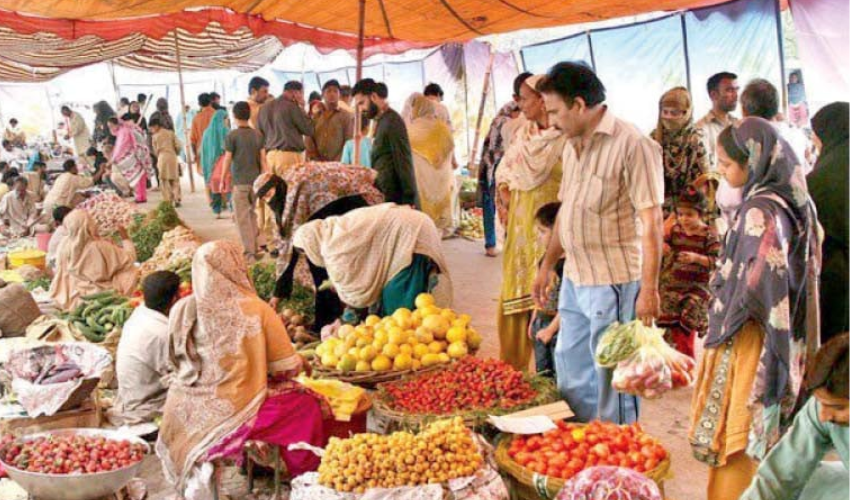
As the holy month of Ramadan commences, the prices of essential commodities have skyrocketed across major cities, leaving citizens struggling to afford basic food items.
Despite government promises to curb inflation, profiteers and hoarders continue to exploit the situation, causing artificial shortages and price manipulation.
Punjab’s price control magistrates failed to deliver on the first day of Ramadan.
Lahore’s model bazaars, established to provide relief to consumers, have also fallen short of expectations, with buyers complaining about both the quality and inflated prices of food items. Meanwhile, Islamabad residents report a drastic increase in fruit prices compared to just three days prior, further exacerbating affordability concerns.
Punjab Chief Minister Maryam Nawaz has ordered an immediate crackdown on hoarders and profiteers, directing all commissioners and deputy commissioners to enforce strict price monitoring. She has emphasized the need for transparent price displays, real-time tracking of supply and demand, and legal action against those violating price controls.
Despite these directives, traders and vendors continue to defy official price lists, citing supply chain issues and rising wholesale costs. Consumers lament that while global markets offer Ramadan discounts, local retailers are driving prices higher, making it nearly impossible for low-income families to observe the holy month without financial strain.
With inflation already at record highs, the government’s failure to regulate essential commodity prices raises serious concerns about its ability to provide relief during this critical period.
If immediate action is not taken, unchecked profiteering could further burden struggling households across the country.
Record inflation in Karachi.
In Karachi, fruits and vegetables are being sold at exorbitant rates, with bananas priced at Rs150 per dozen against the official rate of Rs148, and golden apples retailing at Rs300 per kg instead of Rs219. Similarly, in Hyderabad, vendors have arbitrarily raised prices, making it increasingly difficult for the public to afford fresh produce.
In Quetta, the much-hyped Ramadan Sasta Bazaar has failed to provide the promised relief to citizens. Many stalls remain empty, forcing disappointed shoppers to return home without essential items. Vegetables, meat, and bakery products are still being sold at regular market rates, contrary to government claims of subsidized prices.
Frustrated shoppers have expressed their disappointment, stating that the initiative has not lived up to expectations. They urge the district administration to take concrete measures to ensure genuine relief during Ramadan.
